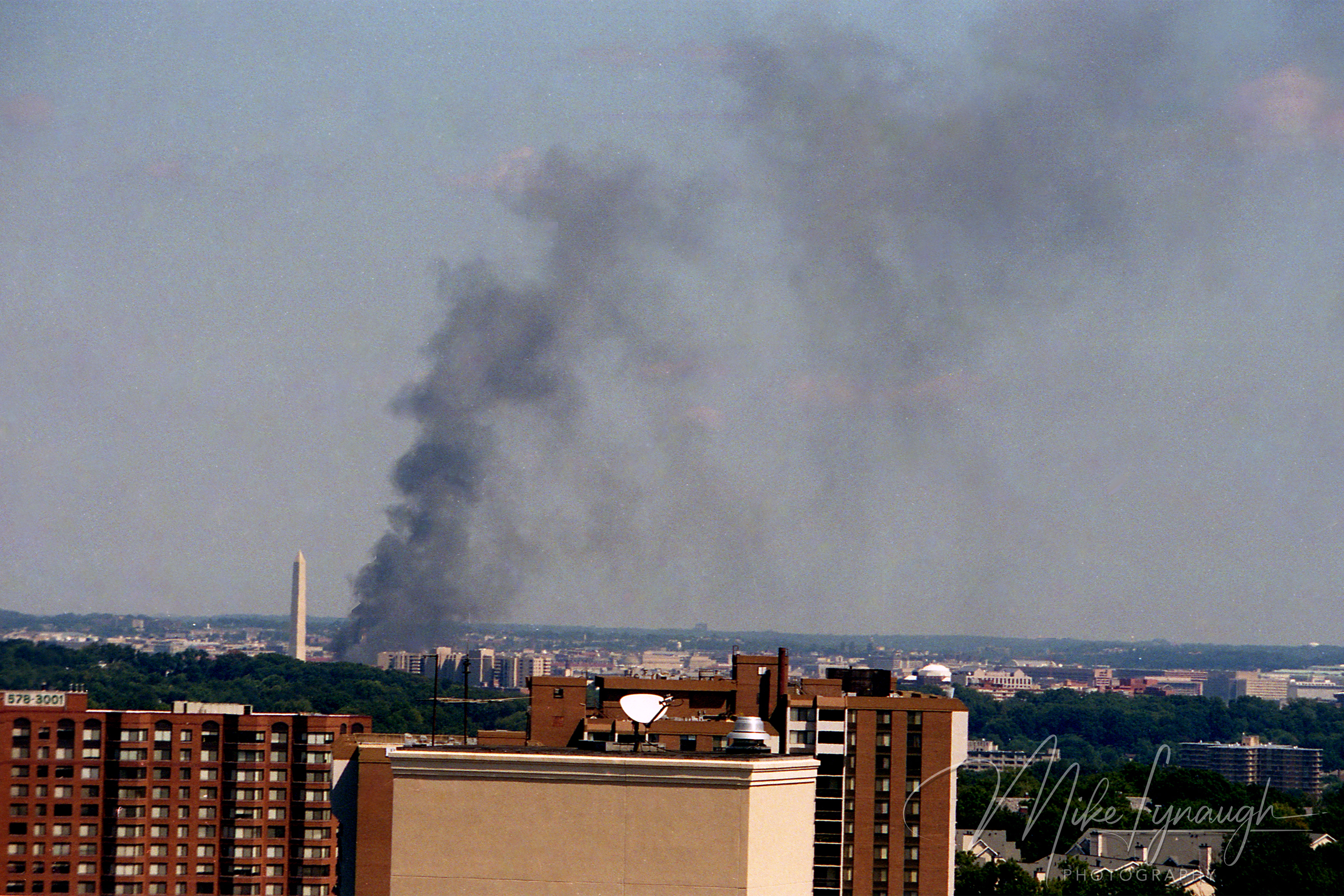
 Photographed from the rooftop of an apartment building on Seminary Road in Alexandria, Virginia, on September 11, 2001, this distant perspective captures dark plume smoke rising from the Pentagon following the crash of American Airlines Flight 77. The Washington Monument stands visible on the horizon beyond Northern Virginia apartment complexes, documenting the immediate aftermath of the terrorist attack on the nation's military headquarters when regional highways were closed to traffic. © Mike Lynaugh Photography
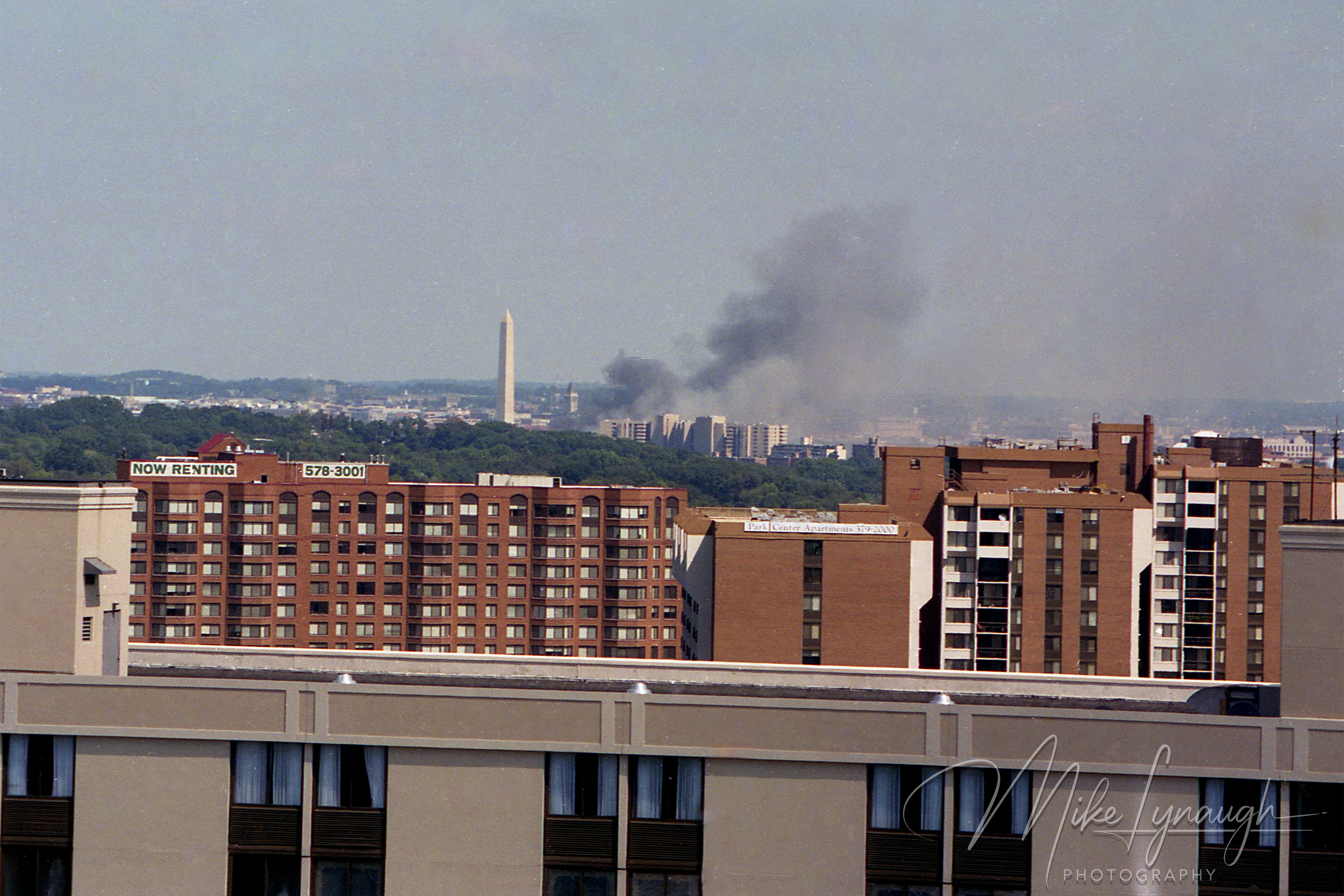 Photographed from an Alexandria, Virginia rooftop on September 11, 2001, a U.S. Army UH-1 Iroquois "Huey" medical evacuation helicopter flies directly toward the thick plume of smoke rising from the Pentagon. Captured shortly after American Airlines Flight 77 struck the building, the image documents emergency military air response over Northern Virginia, with both the Washington Monument and the U.S. Capitol dome visible along the distant skyline. © Mike Lynaugh Photography
 Photographed from an Alexandria, Virginia rooftop on September 11, 2001, a massive column of dark smoke billows thousands of feet into the clear sky above the Pentagon following the impact of American Airlines Flight 77. The distant Washington DC skyline frames the right side of the view—with the Washington Monument clearly visible to the left of the rising plume—capturing the immediate, devastating scale of the attack on the nation's military headquarters. © Mike Lynaugh Photography
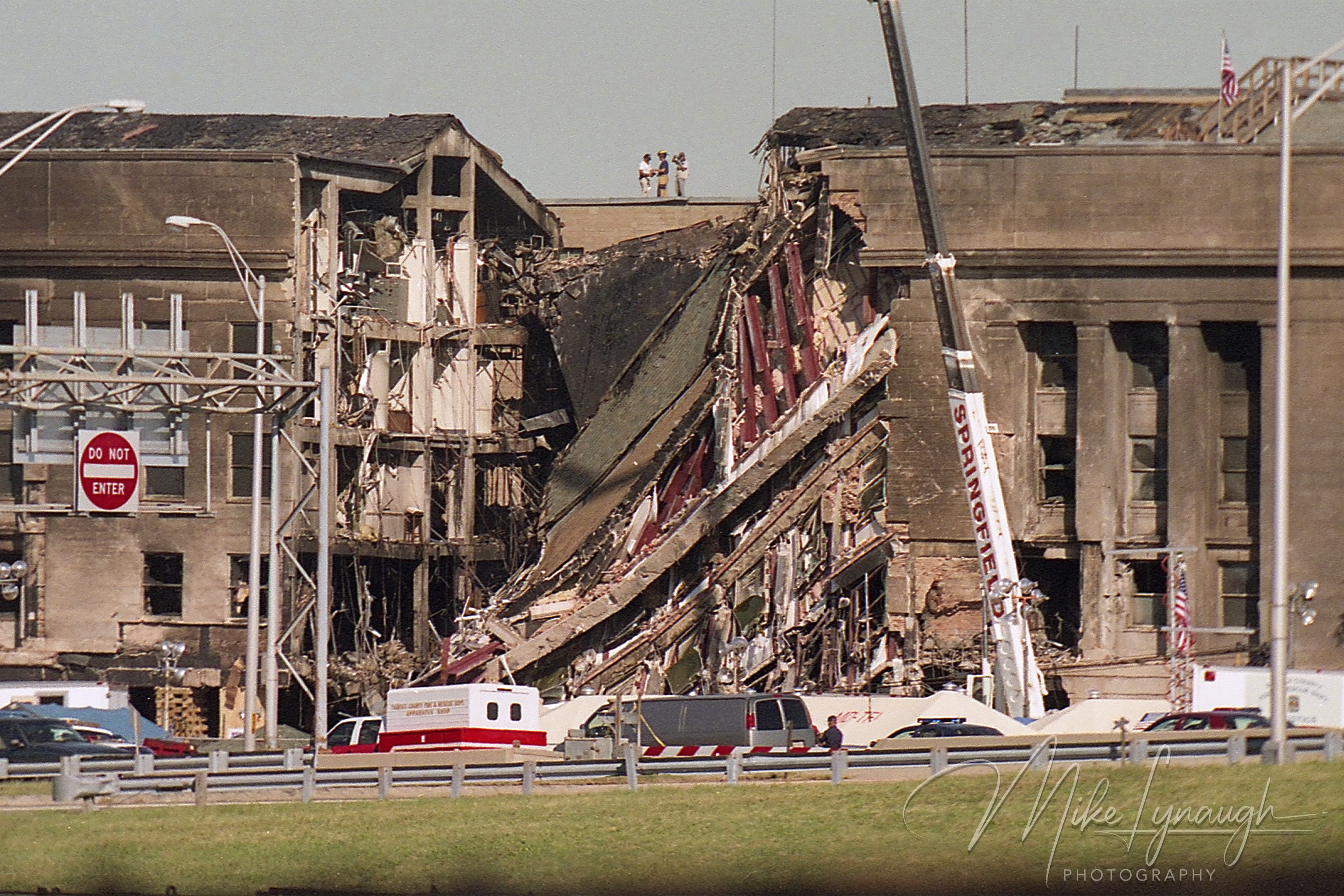 Photographed on September 12, 2001, this direct view focuses on the collapsed western ring of the Pentagon following the terrorist attack on September 11. A small group of emergency personnel and first responders can be seen surveying the site from atop the intact roof, while a large Springfield rescue crane stabilizes the area beside exposed, sheared office levels and pancaked concrete slabs. © Mike Lynaugh Photography
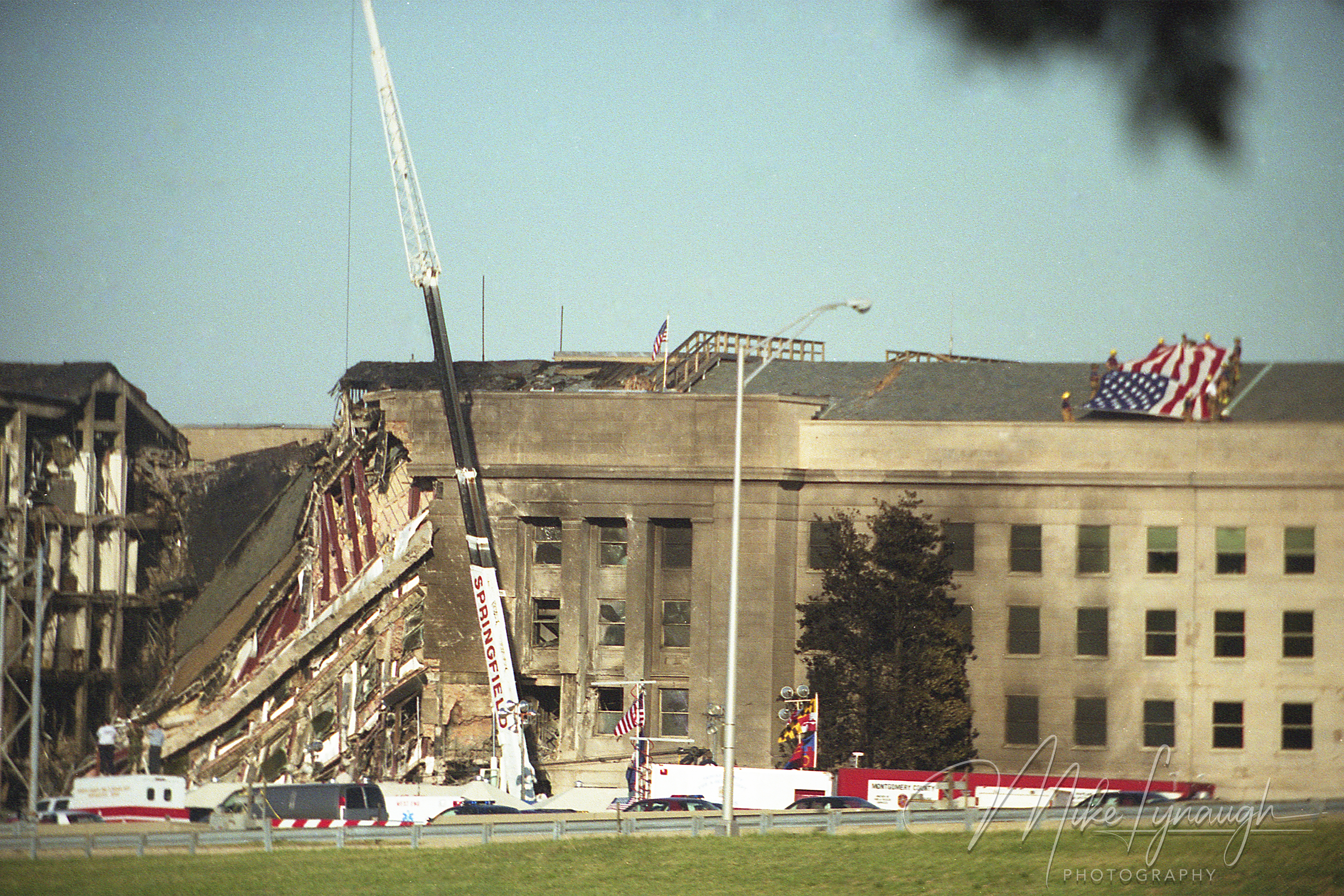 Photographed on September 12, 2001, soldiers from The Old Guard (3rd U.S. Infantry Regiment) and first responders look down from the roof as a massive American flag hangs fully unfurled over the western facade of the Pentagon. Positioned directly alongside the collapsed structure and charred walls caused by the impact of American Airlines Flight 77, this iconic gesture of resilience took place while recovery cranes and emergency crews worked around the clock on the ground below. © Mike Lynaugh Photography
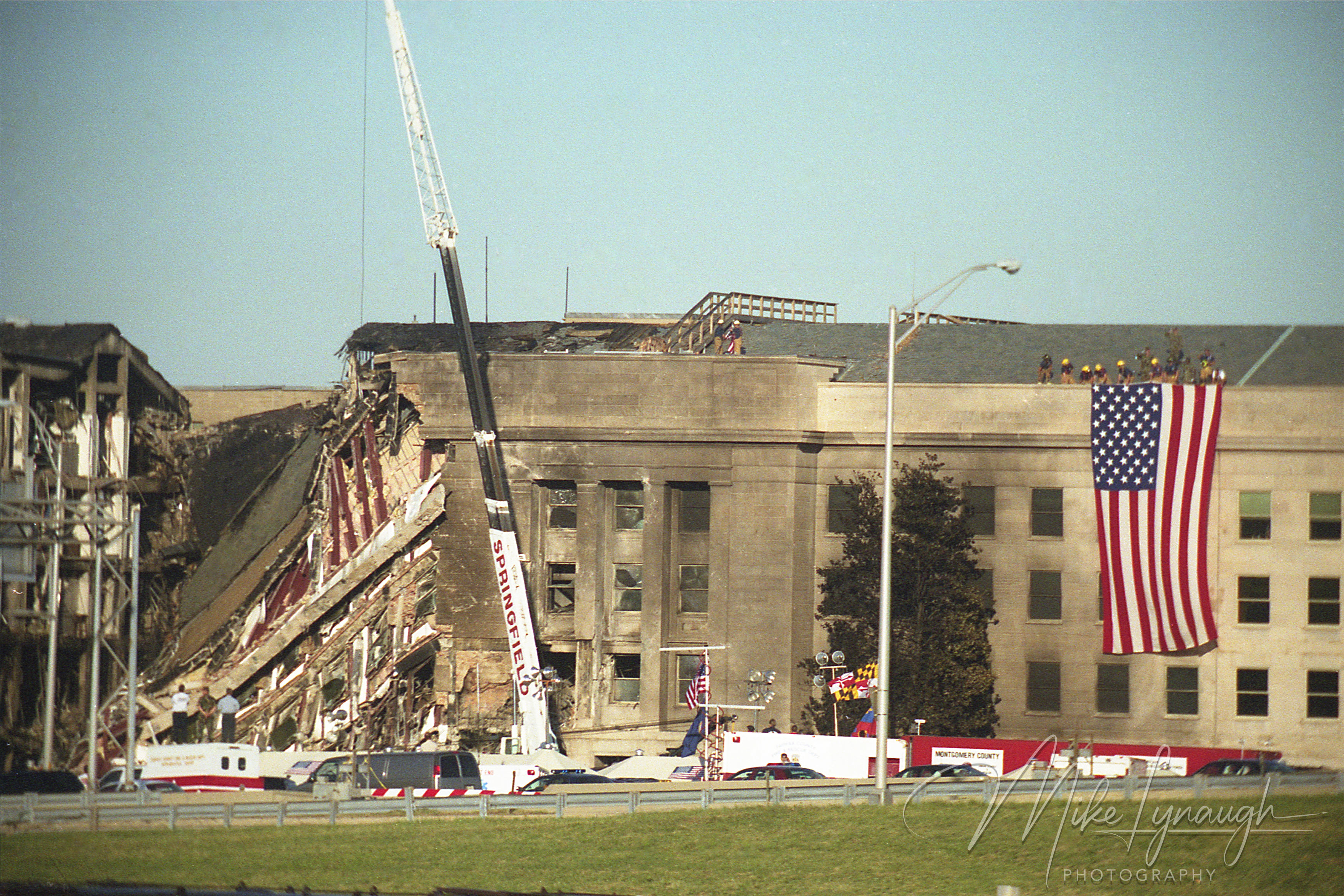 Photographed on September 12, 2001, members of The Old Guard (3rd U.S. Infantry Regiment) from nearby Fort Myer gather on the roof of the Pentagon to unfurl a large American flag across the intact section of the building. Captured next to the severe structural collapse of the outer rings caused by the crash of American Airlines Flight 77, this moment documents soldiers and first responders preparing to drape the patriotic symbol over the site during ongoing rescue operations. © Mike Lynaugh Photography
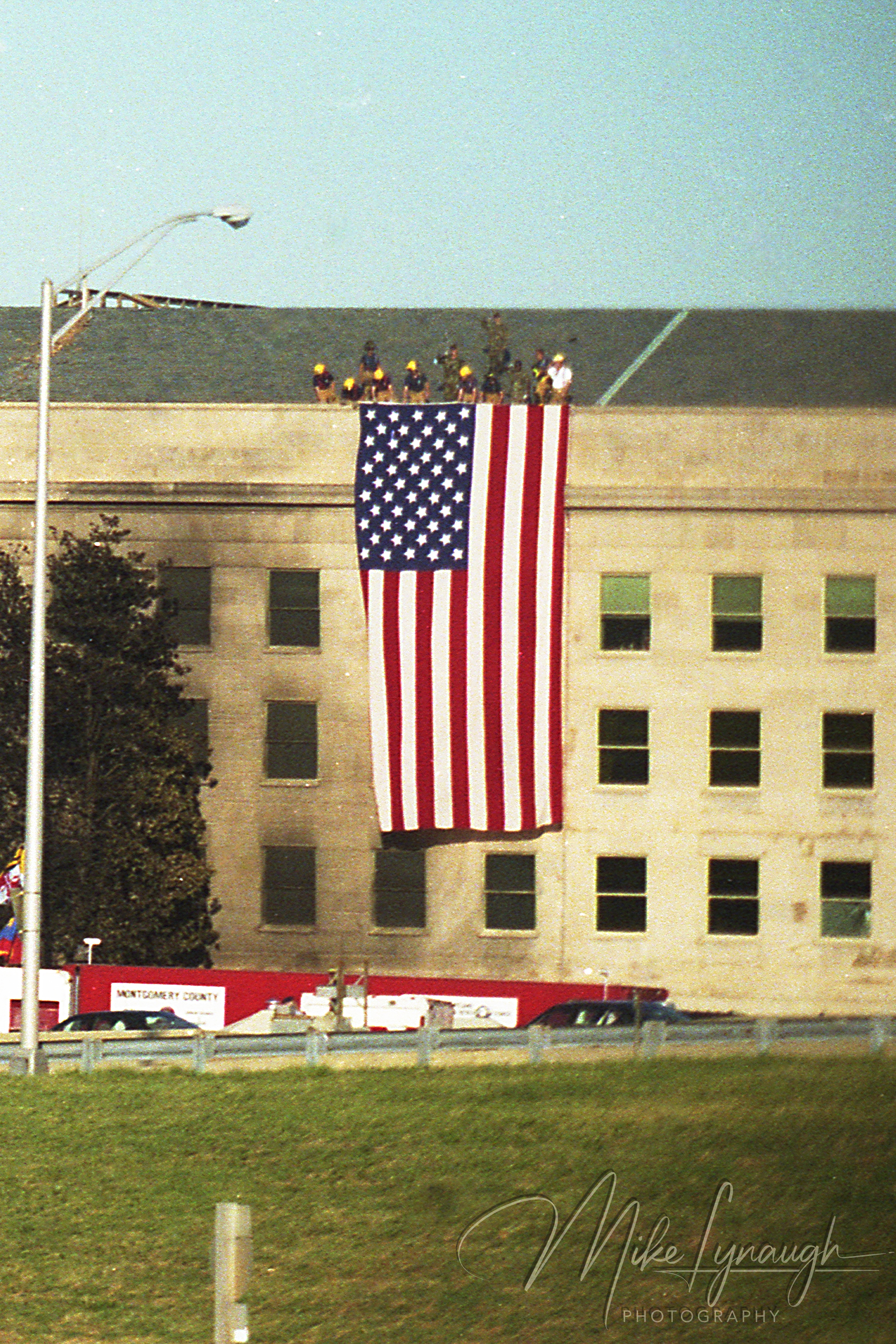 Photographed on September 12, 2001, this vertical close-up captures members of The Old Guard (3rd U.S. Infantry Regiment) and emergency responders standing along the roofline of the Pentagon after hanging a massive American flag over the building's limestone facade. Positioned directly beside the damaged section following the terrorist attack on September 11, the iconic banner served as a powerful symbol of national resolve during initial recovery operations. © Mike Lynaugh Photography
 Photographed on September 12, 2001, a U.S. Army VH-60N / UH-60 Black Hawk helicopter flies in front of the collapsed western facade of the Pentagon in Arlington, Virginia. A large American flag hangs unfurled from the intact roof section adjacent to the severe structural collapse, while emergency responders and military personnel conduct rescue and recovery efforts along the perimeter following the September 11 terrorist attack. © Mike Lynaugh Photography
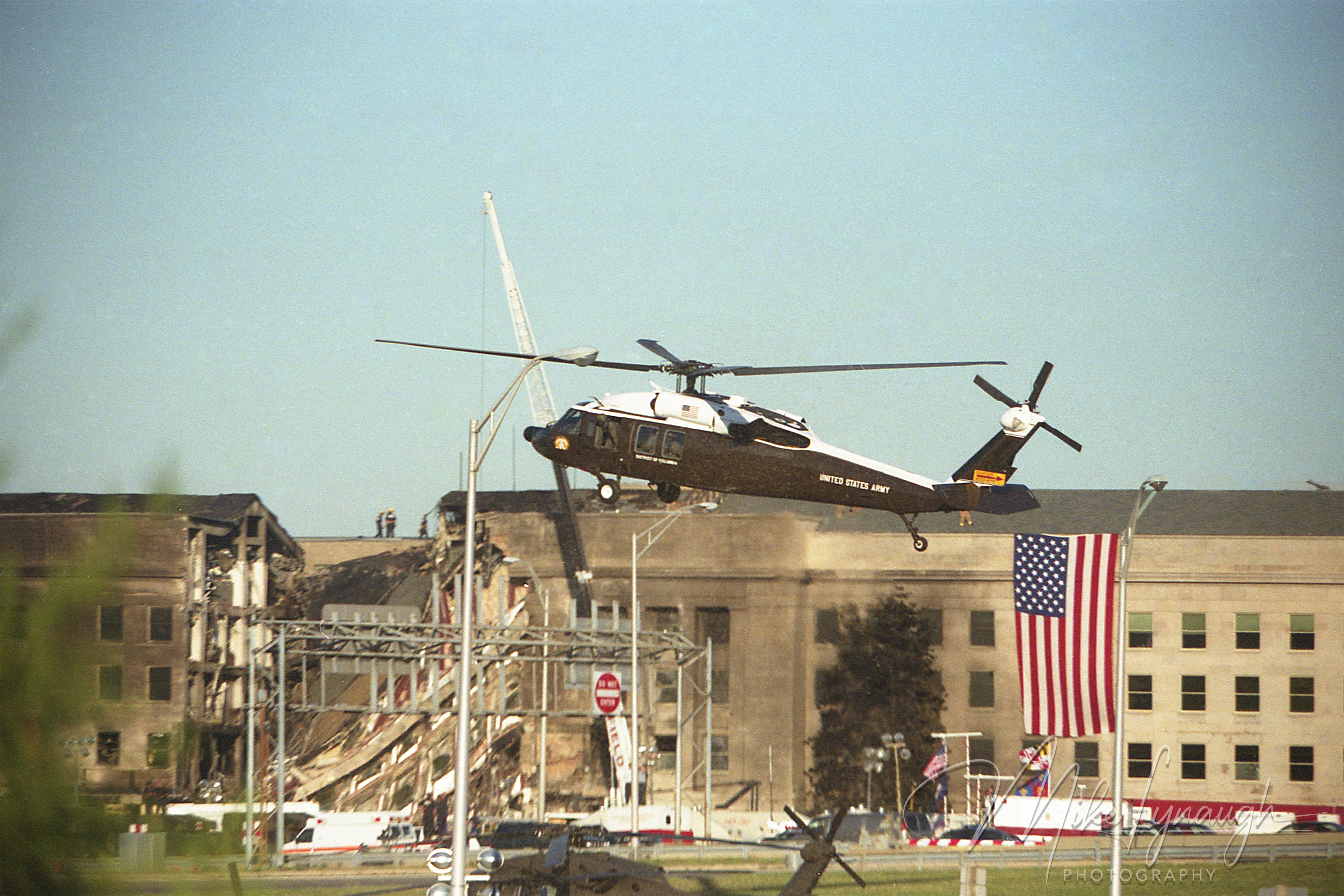 Photographed on September 12, 2001, a U.S. Army VH-60N / UH-60 Black Hawk helicopter sweeps low in front of the damaged outer wall of the Pentagon in Arlington, Virginia. One day after the September 11 terrorist attack, heavy emergency response activity surrounds the site—showing smoke still rising from the blackened facade, construction cranes, heavy excavators, and police vehicles deployed along the perimeter during rescue and recovery operations. © Mike Lynaugh Photography
 Photographed on September 12, 2001, news correspondents and television camera crews gather on a nearby grassy hill to report on the aftermath of the September 11 attack at the Pentagon. In the background across the staging area, heavy equipment transport trucks, staged medevac helicopters, and the unfurled American flag line the grounds in front of the damaged building and collapsed western facade. © Mike Lynaugh Photography
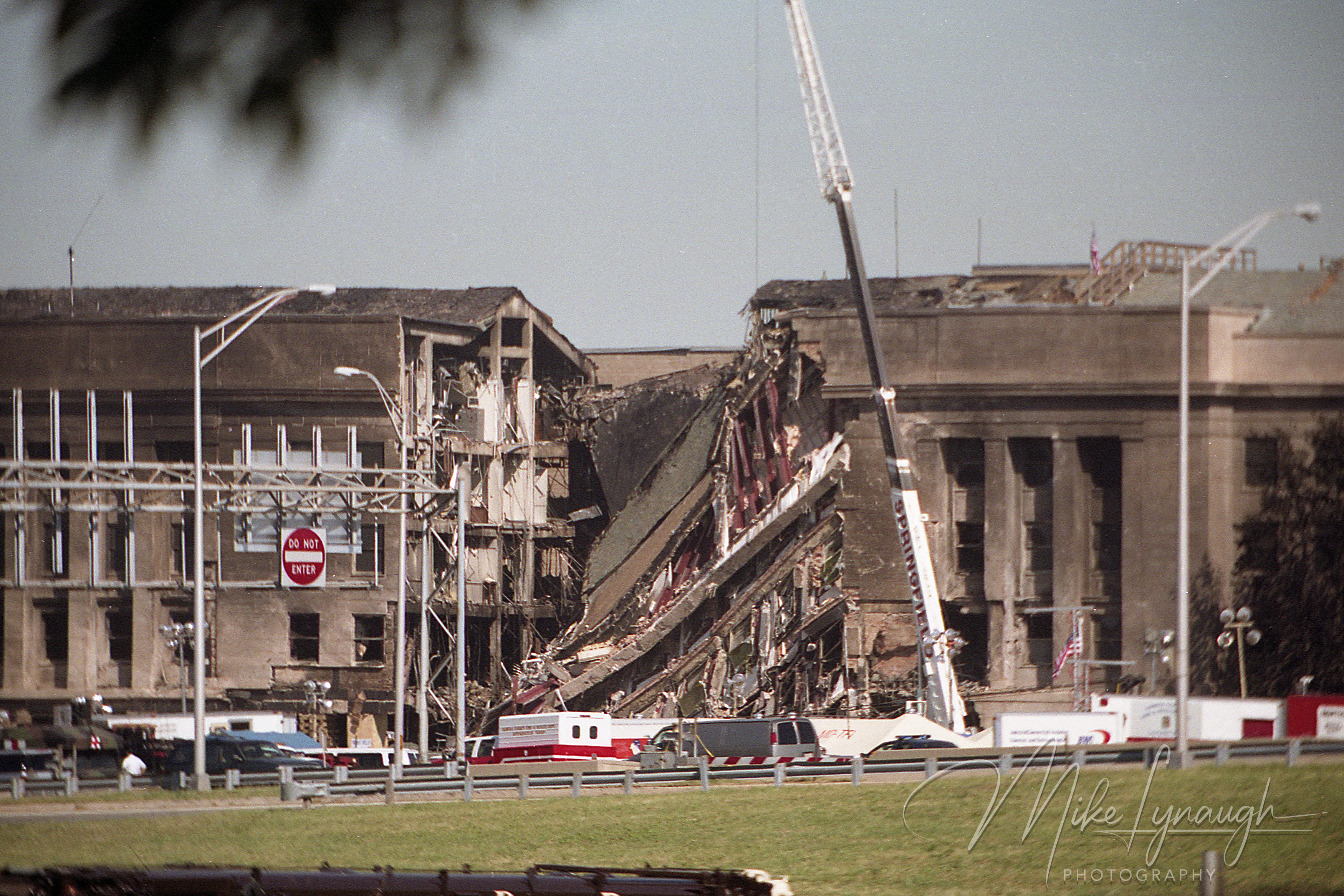 Photographed on September 12, 2001, this ground-level perspective captures the severe structural damage to the western facade of the Pentagon following the crash of American Airlines Flight 77. The photograph highlights the pancaked floor slabs of E Ring and D Ring where the outer wall collapsed, with a large Springfield crane deployed directly alongside exposed interior office floors as urban search and rescue crews begin operations at the site. © Mike Lynaugh Photography
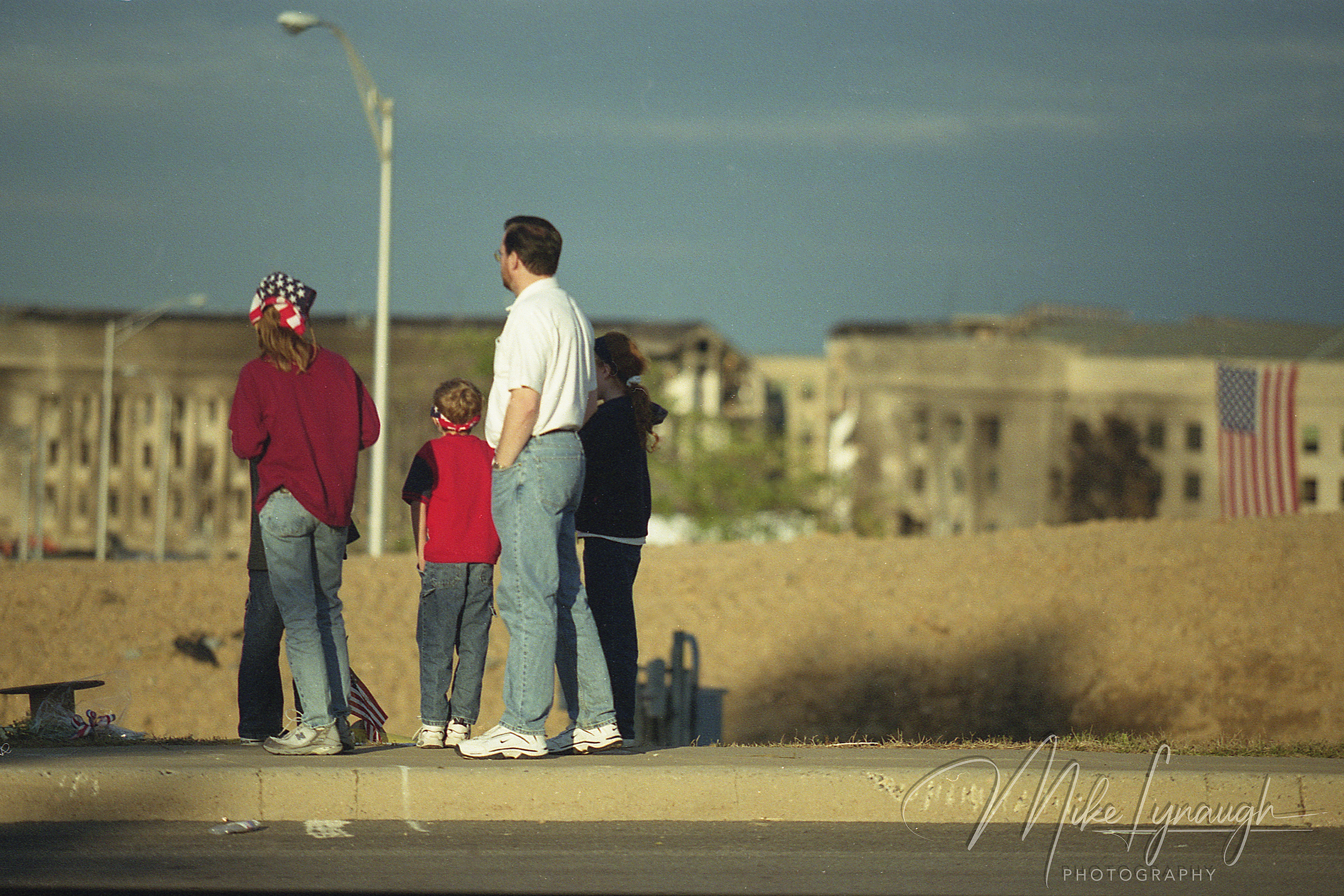 Photographed on September 15, 2001, four days after the September 11 terrorist attack, a family wearing patriotic headbands stands along a perimeter sidewalk looking across at the damaged Pentagon in Arlington, Virginia. In the background, the charred facade and collapsed section remain visible beside the massive Garrison American flag hanging from the building's outer wall, illustrating the solemn public viewing and remembrance at the site. © Mike Lynaugh Photography
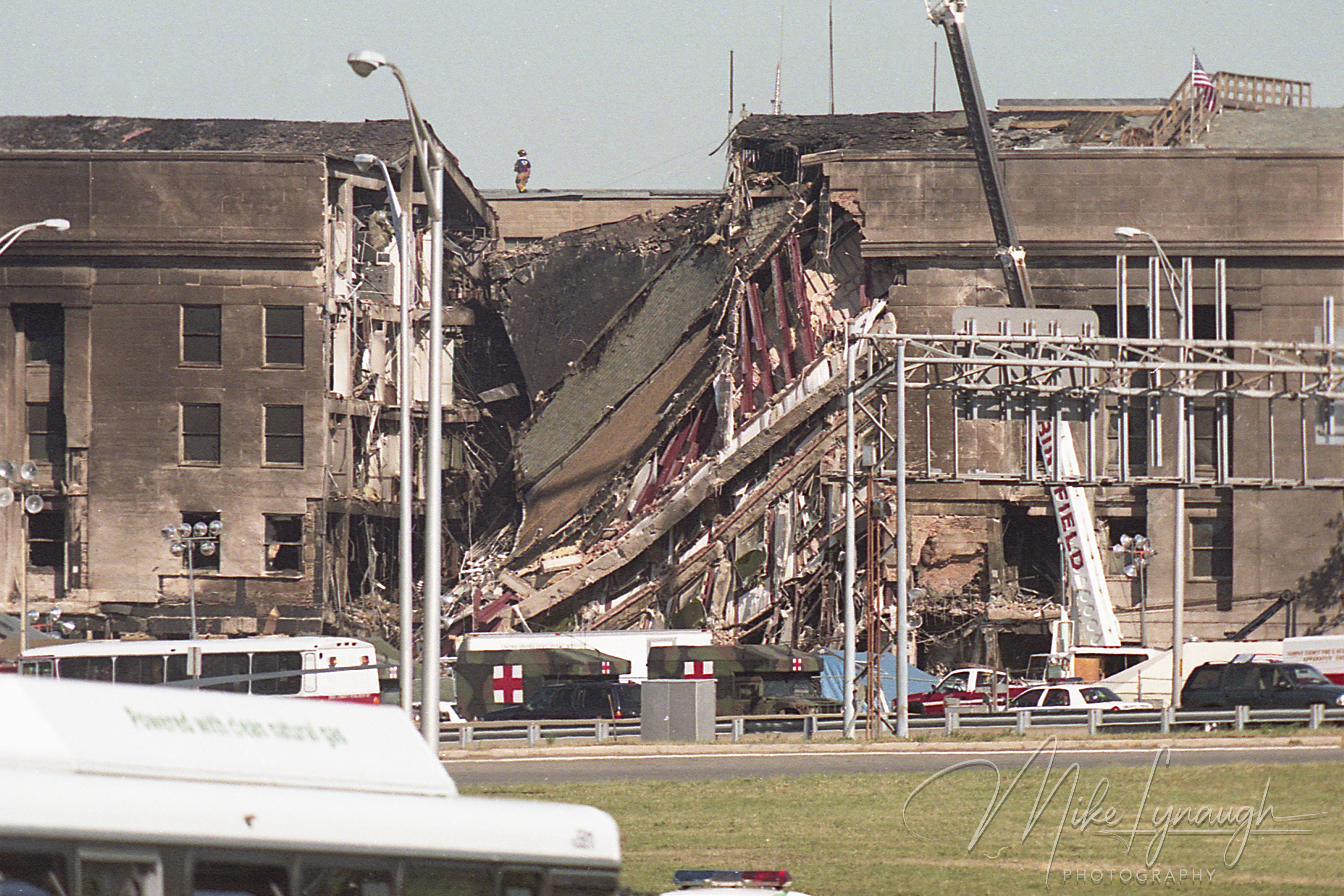 Captured on September 12, 2001, this close-up photograph details the catastrophic structural failure along the western facade of the Pentagon following the crash of American Airlines Flight 77. The image provides a stark view of the pancaked concrete floors, exposed inner offices, and scorched exterior walls, while a lone emergency responder stands atop the intact roof structure. Below, emergency military ambulances, utility vehicles, and heavy construction cranes line the perimeter to assist in ongoing search, recovery, and reinforcement efforts. © Mike Lynaugh Photography
 Photographed from a low ground-level perspective across an open perimeter field, this image details the extensive gap left by the collapsed E Ring section of the Pentagon in Arlington, Virginia. Scorched walls, exposed interior framework, and shoring timbers supporting damaged sections remain prominent alongside the Garrison American flag hanging unfurled from the intact outer wall as recovery and stabilization work continues. © Mike Lynaugh Photography
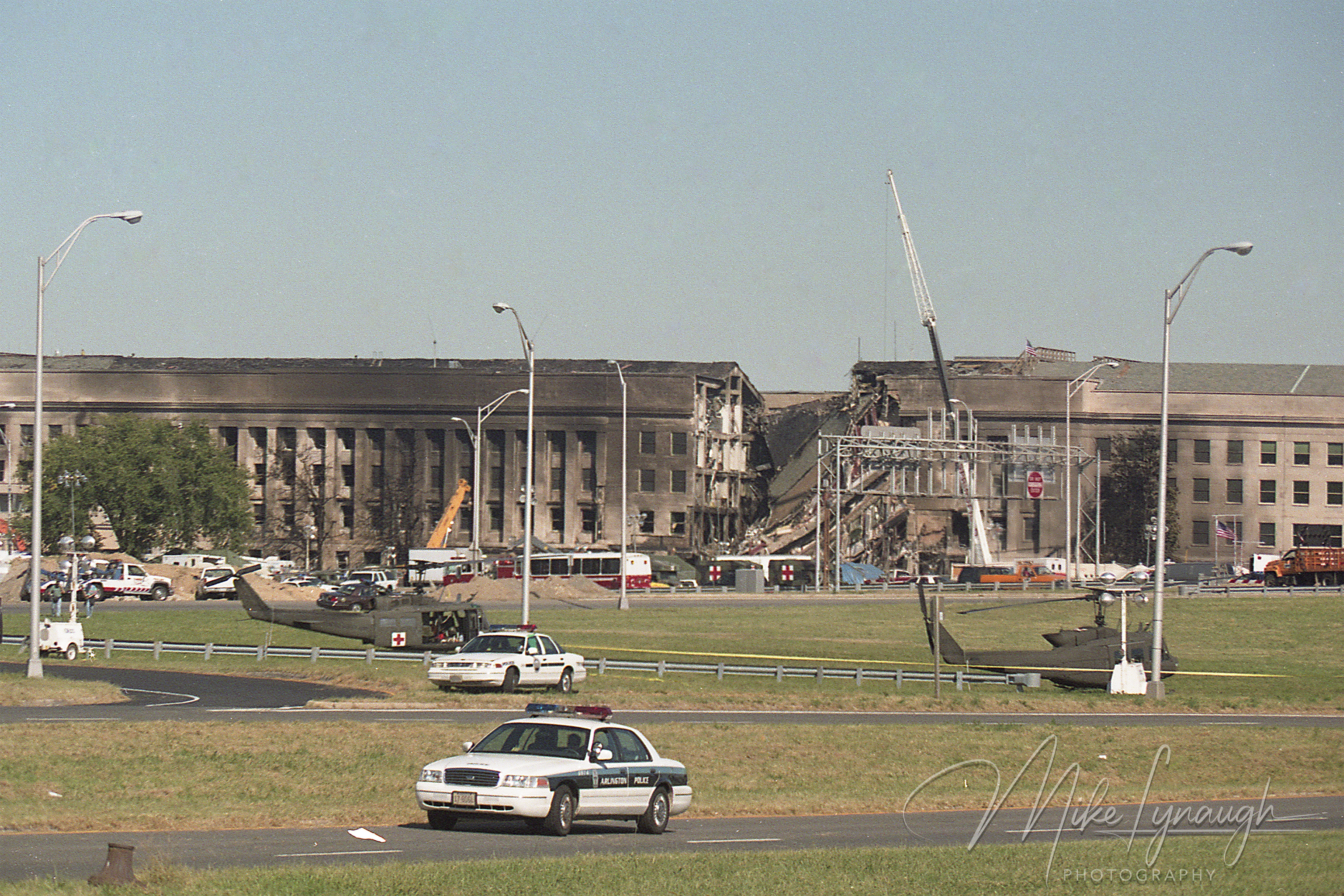 Photographed on September 12, 2001, this wide landscape perspective illustrates the extensive perimeter emergency operations at the Pentagon following the September 11 attack. In the foreground, Arlington County police cruisers patrol closed roadways while U.S. Army medevac helicopters sit staged on the lawn. Beyond the perimeter security, the collapsed section of the western wall, charred facade, and heavy recovery cranes dominate the background. © Mike Lynaugh Photography
 Captured during the days following September 11, 2001, this close-up photo shows small American flags handwritten with personal messages of remembrance and unity left at a spontaneous makeshift memorial. Flowers, candles, and patriotic tributes line the foreground, while the distant, damaged Pentagon structure and Washington Monument remain visible across the landscape in Arlington, Virginia. © Mike Lynaugh Photography
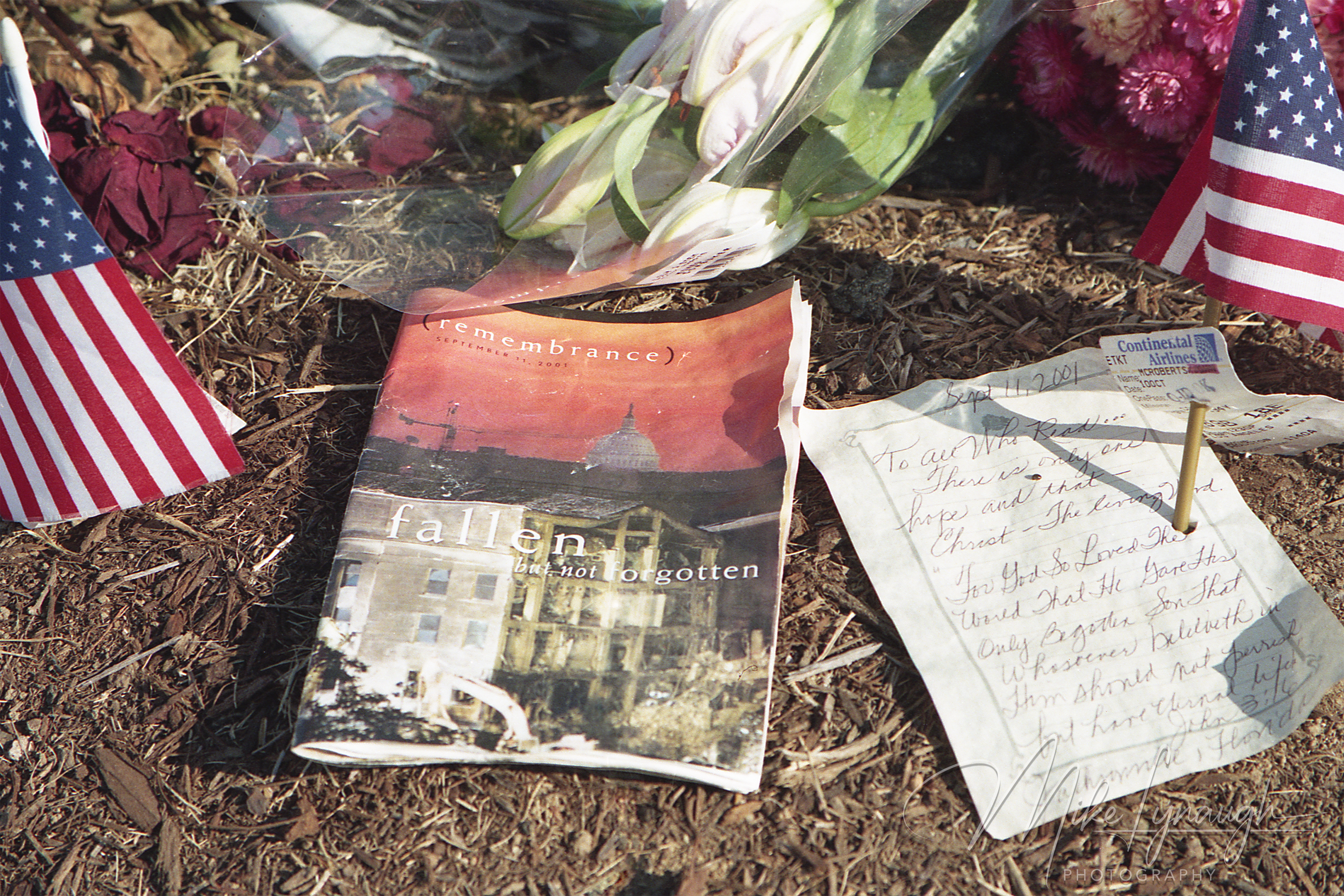 Photographed on September 28, 2001, this close-up captures a ground-level memorial offering left on the mulch near the Pentagon. The tribute features a "remembrance" booklet titled fallen but not forgotten, small American flags, fresh lilies, a handwritten note citing John 3:16 from a visitor in Tampa, Florida, and an attached Continental Airlines ticket stub belonging to passenger S. McRoberts—a quiet token of travel left in memory of those lost on September 11. © Mike Lynaugh Photography
 Captured at a makeshift 9/11 memorial site following the September 11 terrorist attacks, this photograph documents a poignant, handwritten letter dated September 14, 2001. Written by 11-year-old Alexandra Penate from Hyattsville Elementary School, the note offers prayers, words of comfort, and support to the victims and their families while describing how her school organized Red Cross donations during the national tragedy. © Mike Lynaugh Photography
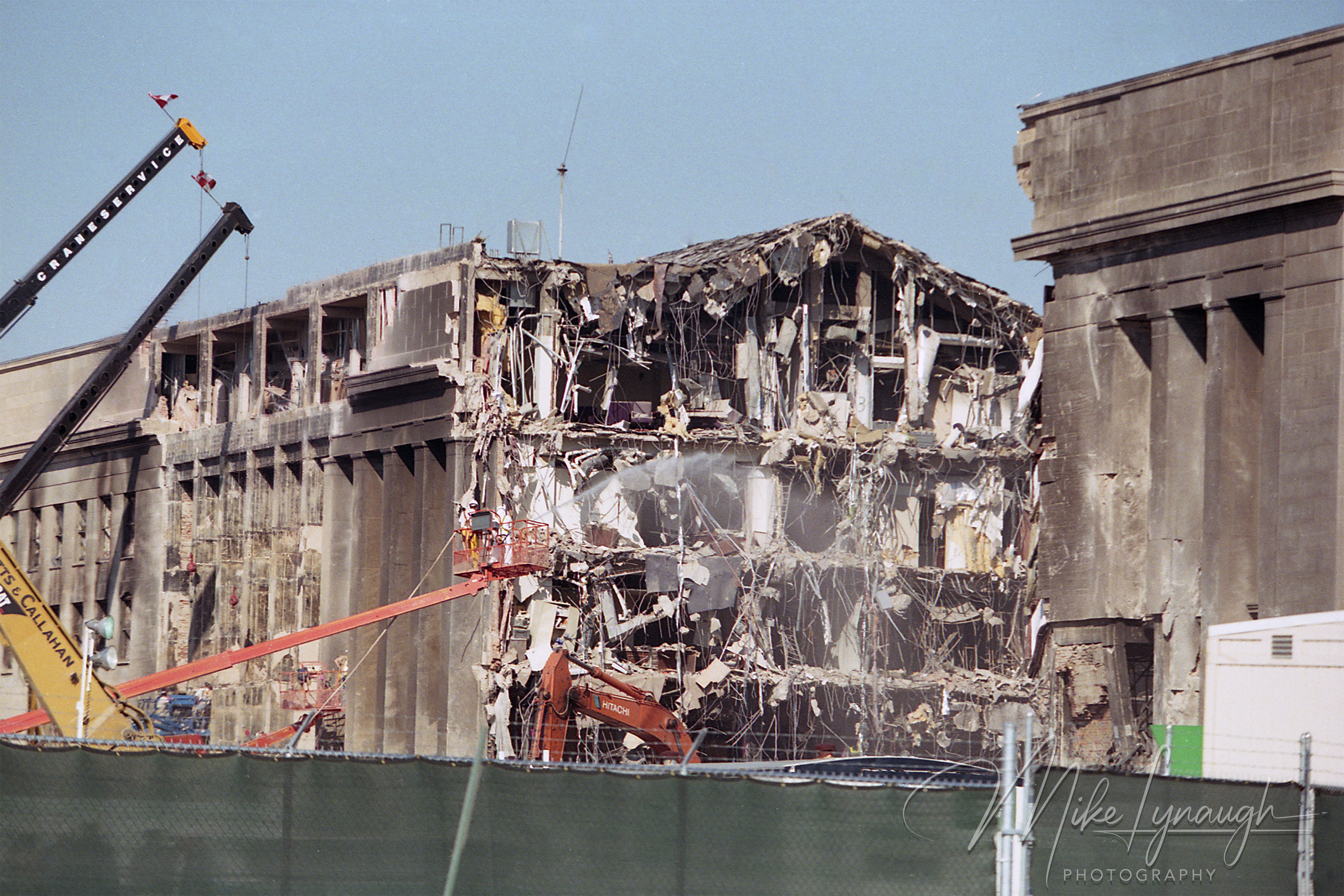 Photographed on September 28, 2001, this telephoto shot shows recovery workers using a high-reach boom lift to spray water into the sheared sections of the Pentagon to suppress dust during demolition. Heavy machinery, including a Hitachi excavator and Potts & Callahan equipment, operates near the exposed interior floors, crushed columns, and tangled steel rebar of the outer E Ring following the September 11 terrorist attack. © Mike Lynaugh Photography
 Captured on September 28, 2001, this detailed photograph documents the ongoing recovery and site clearing at the Pentagon, highlighting the iconic exit hole punched into the D Ring wall near the bottom right of the frame. Heavy excavators from Potts & Callahan and Hitachi work amidst tangled rebar and collapsed concrete floors, clearing debris from the sheared E Ring structure following the crash of American Airlines Flight 77 on September 11. © Mike Lynaugh Photography
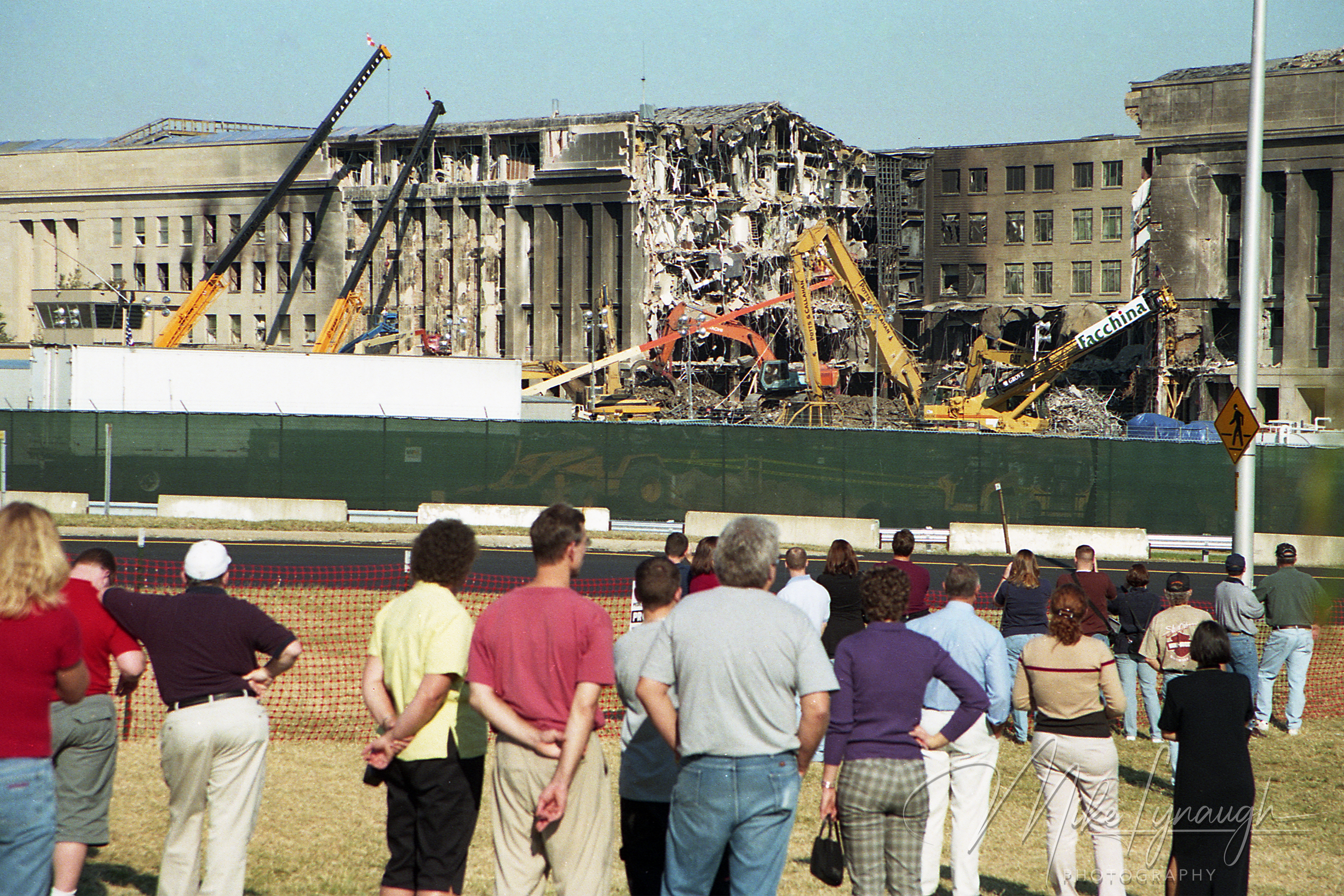 Photographed on September 28, 2001, a crowd of onlookers stands behind a temporary orange safety fence to observe the extensive demolition and recovery efforts at the Pentagon. In the background across the highway, heavy equipment including Potts & Callahan excavators, Facchina machinery, and high-reach cranes clear the sheared inner structure and exposed E Ring walls created by the September 11 attack. © Mike Lynaugh Photography
 Captured seventeen days after the September 11 terrorist attacks on September 28, 2001, this telephoto image reveals the sheer structural destruction deep within the inner rings of the Pentagon. Exposed rebar, hanging concrete debris, and sheared office interiors highlight the force of the impact and subsequent fire, while heavy cranes, Potts & Callahan excavators, and boom lifts operate along the perimeter fence during active site clearing and stabilization efforts. © Mike Lynaugh Photography
 Photographed on September 28, 2001, this close-up captures a heartfelt makeshift tribute dedicated to the fallen flight crews of American Airlines Flights 77 and 11. Attached to a small tree near the Pentagon perimeter, the printed sign featuring the American Airlines logo reading "In Memory of Fallen Co-Workers" is surrounded by coins, small flags, handwritten notes, and floral bouquets left by visiting colleagues and members of the public. © Mike Lynaugh Photography
 Photographed on September 28, 2001, a wide-angle landscape captures scores of citizens gathered along a grassy hill in Arlington, Virginia, looking toward the distant Pentagon. Across the highway, active demolition and recovery operations continue along the breached facade where heavy cranes and excavators work beneath a clear sky, illustrating the persistent public presence and solemn observation weeks after the September 11 attack. © Mike Lynaugh Photography
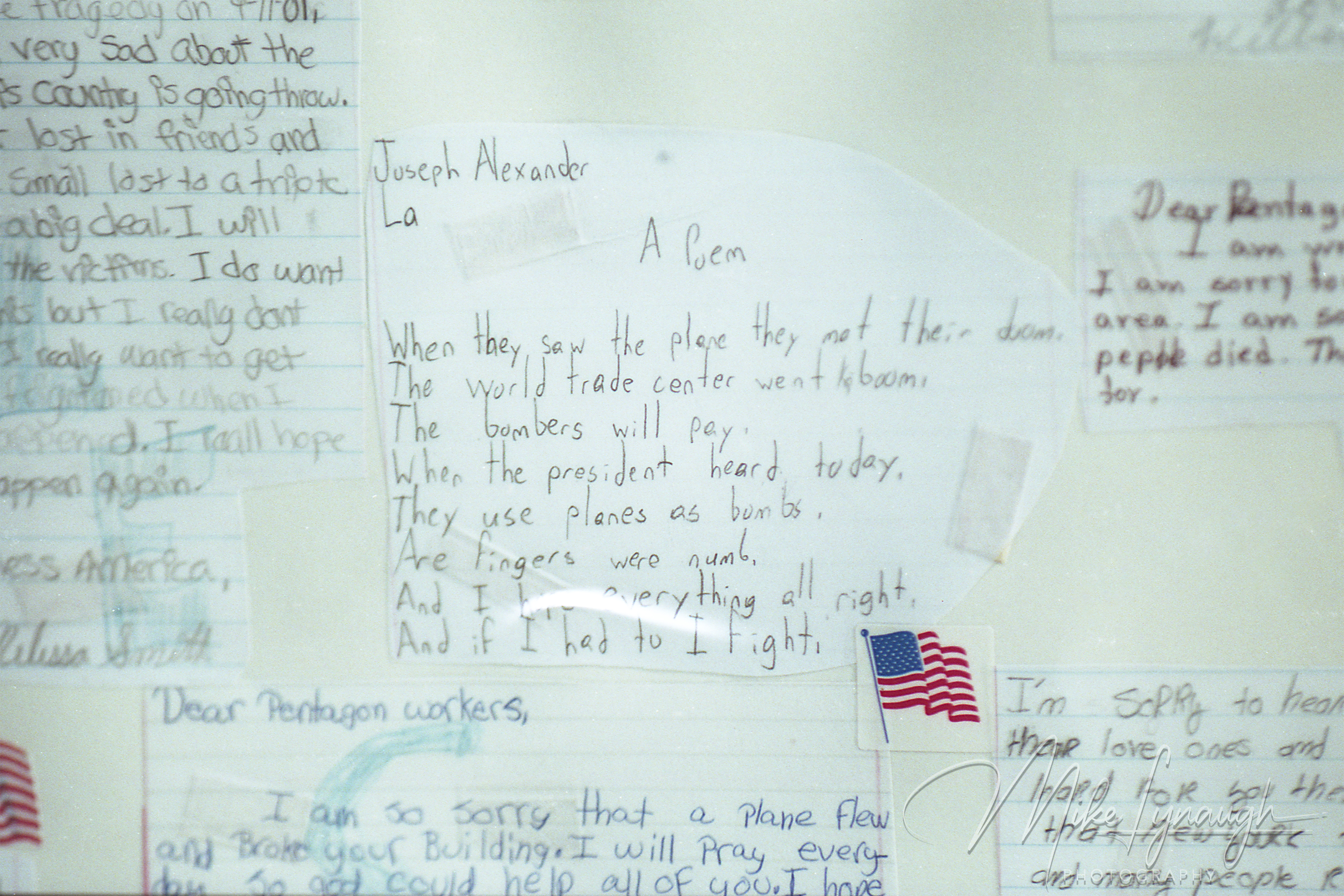 Photographed on September 28, 2001, this detail shot captures a child's handwritten poem signed by Joseph Alexander from Louisiana, pinned to the public memorial board near the Pentagon. Surrounded by other letters of support from students across the country—including notes addressed directly to "Pentagon workers"—the poem reflects how young Americans processed the shock and emotions following the September 11 terrorist attacks. © Mike Lynaugh Photography
 Photographed on September 15, 2001, a close-up image reveals a heartfelt, handwritten note attached to an American flag at the spontaneous makeshift memorial near the Pentagon. Signed by "Scooter + Gail Humphries," a motorcycle rider who traveled from Cincinnati, Ohio, the message expresses deep sympathy to the victims and families in Washington while honoring the heroes of the nation during the initial days following the September 11 attack. © Mike Lynaugh Photography
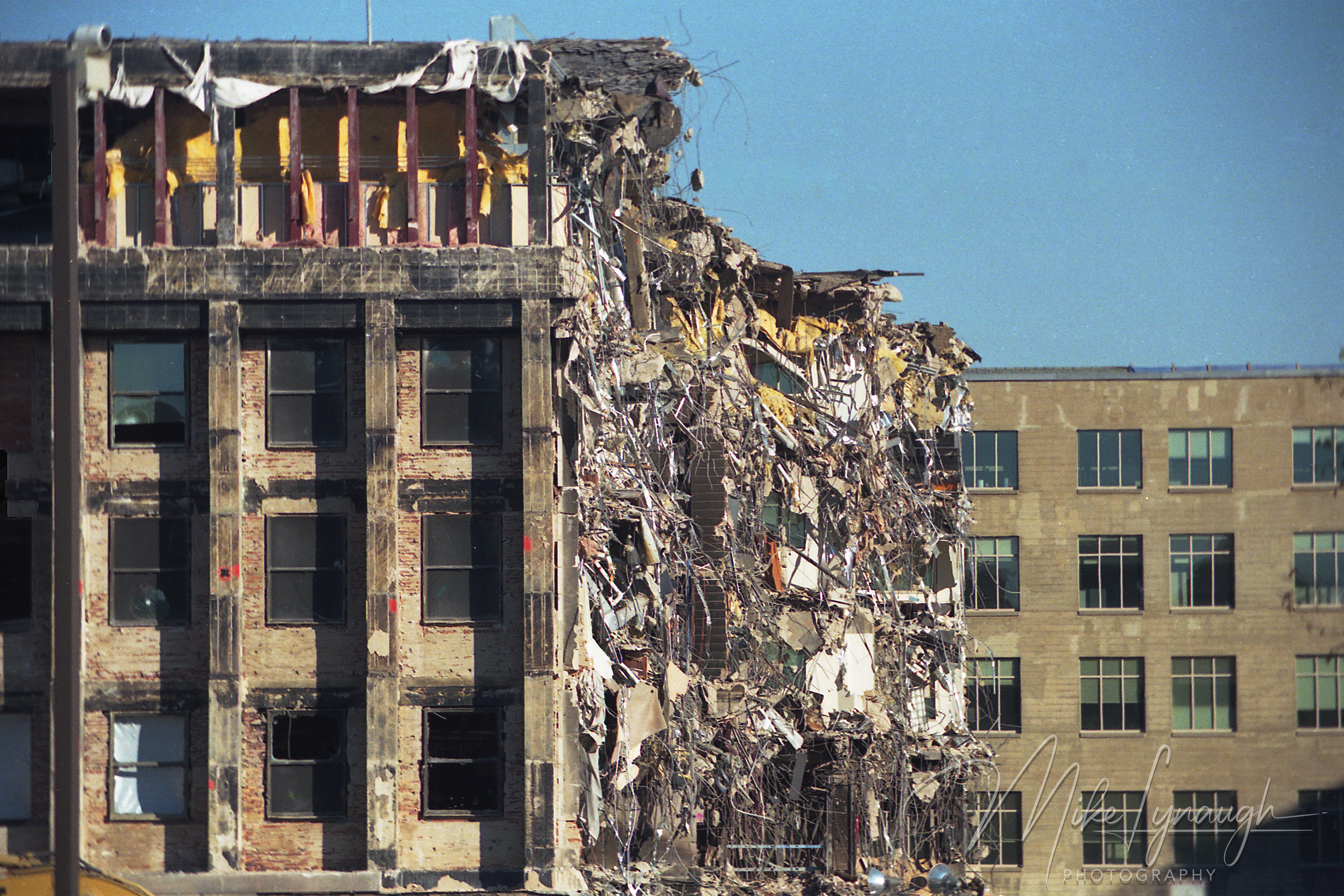 Photographed on September 28, 2001, this telephoto view highlights the sharp structural divide where the Pentagon’s outer limestone facade was sheared away during the September 11 attack. The close detail shows exposed interior columns, stripped brickwork, and a dense tangle of bent steel rebar along the edge of the collapse zone, contrasting sharply with the intact sections of the building's exterior rings visible in the background. © Mike Lynaugh Photography
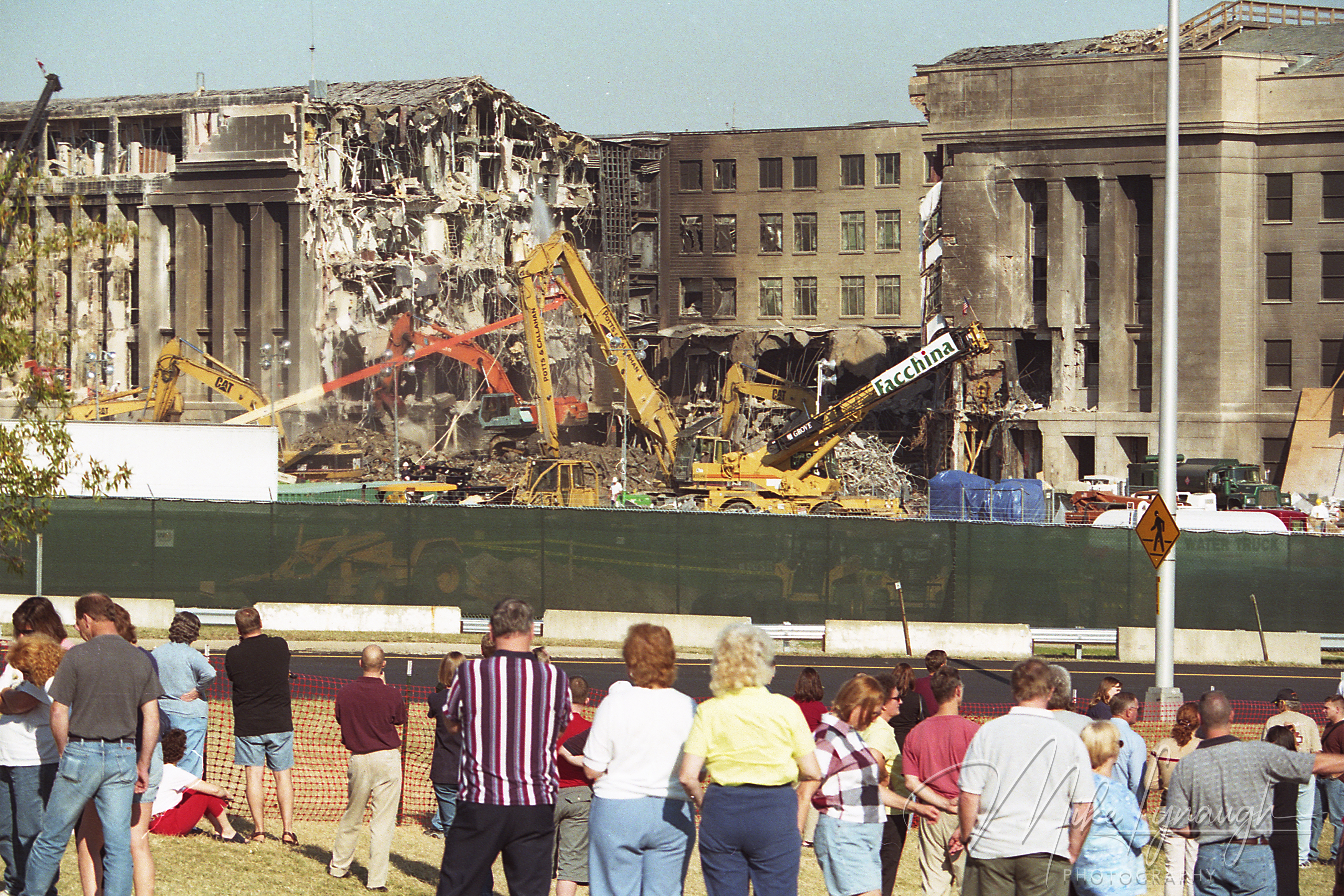 Photographed on September 28, 2001, a crowd of citizens stands along the grassy perimeter watching active demolition and debris removal at the Pentagon. In the clear background view, a Facchina mobile crane and Potts & Callahan heavy excavators operate in the gap between the building's outer walls, clearing heavy rubble near the interior C and D Ring structures following the September 11 terrorist attack. © Mike Lynaugh Photography
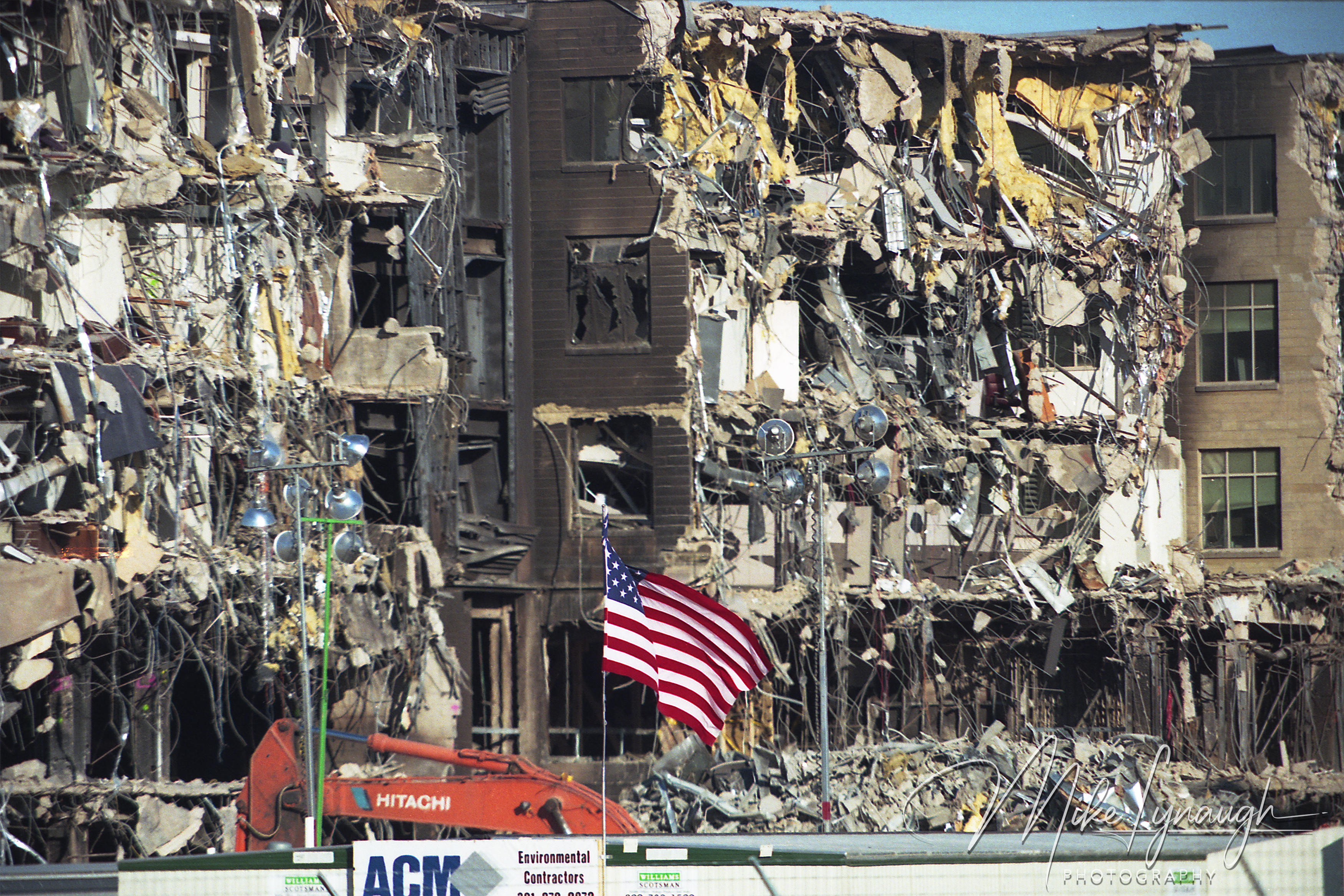 Captured on September 28, 2001, this telephoto detail shows an American flag fluttering against the stark backdrop of the Pentagon's heavily damaged outer rings. Framing the foreground above environmental cleanup signage and heavy Hitachi machinery, the flag stands as a striking symbol of resilience in contrast to the sheared concrete floors, twisted rebar, and exposed internal office spaces left after the September 11 attack. © Mike Lynaugh Photography
 Captured on September 28, 2001 recovery operations, this telephoto close-up shows a site worker positioned high above the ground in a red boom lift, spraying a stream of water directly into the destroyed upper floors of the Pentagon. The technique suppressed hazardous dust and ash as Caterpillar heavy excavators tore down unstable concrete, exposed interior framing, and charred insulation left in the wake of the September 11 attack. © Mike Lynaugh Photography
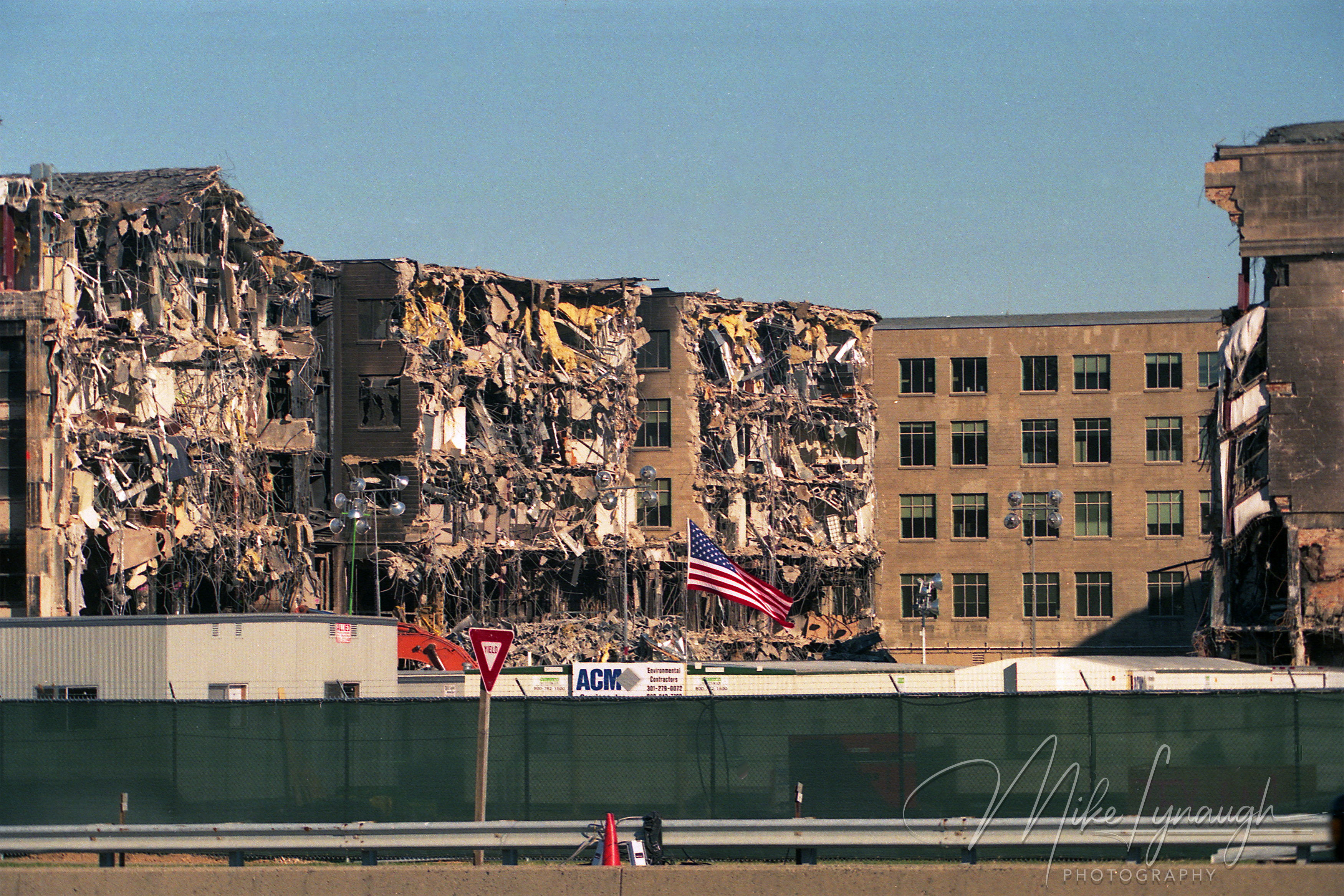 Photographed on September 28, 2001, this wide telephoto shot captures the full breadth of the impact zone across the Pentagon's rings following the September 11 terrorist attack. An American flag flies near temporary construction trailers and ACM Environmental Contractors equipment in the foreground, framing the massive structural breach where multiple floors collapsed, exposing interior offices, tangled rebar, and charred support pillars. © Mike Lynaugh Photography
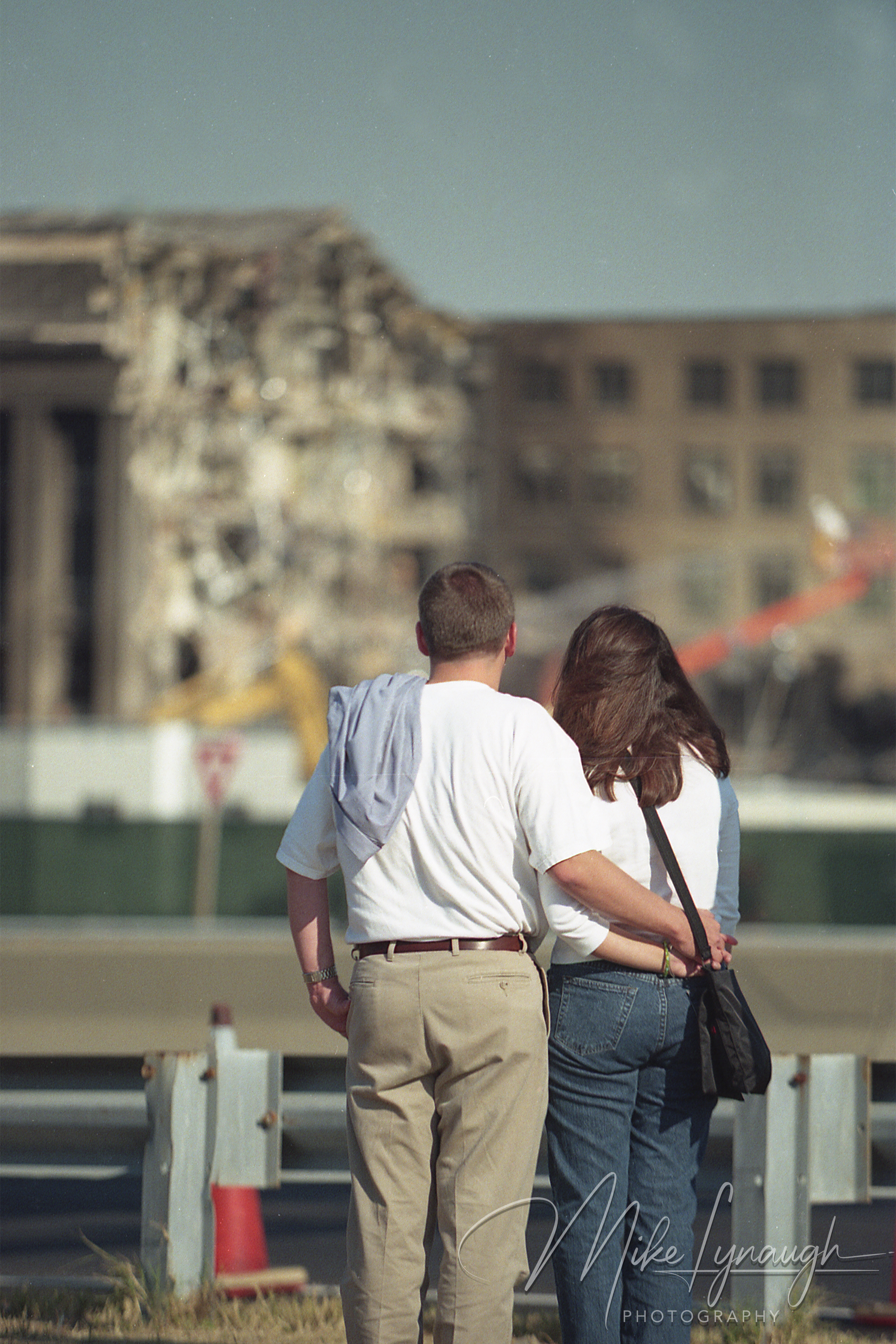 Captured on September 28, 2001, this poignant, shallow-depth-of-field portrait focuses on a couple standing side-by-side with their arms around each other as they observe the Pentagon from across the perimeter road. With the blurred, collapsed structure of the building rising in the background, the image captures a moment of quiet personal reflection and solidarity during the weeks following the September 11 terrorist attack. © Mike Lynaugh Photography
 Captured on September 28, 2001, this detailed photograph documents a handwritten poem and letter left at the Pentagon memorial wall by student Jackie Blackwell. Titled "Angel's" and addressed to the "injured people of the Pentagon," the heartfelt message offers comfort to victims and survivors, reflecting the widespread national outpouring of sympathy from children across the country in the weeks following September 11. © Mike Lynaugh Photography
 Photographed on September 28, 2001, visitors pause to pay their respects and read notes left at a makeshift tree memorial dedicated to the crew members of American Airlines Flights 77 and 11. Located along the grassy hillside overlooking the Pentagon in Arlington, Virginia, the informal shrine gathered flowers, wreaths, and personal messages of remembrance from co-workers and citizens in the weeks following the September 11 attack. © Mike Lynaugh Photography
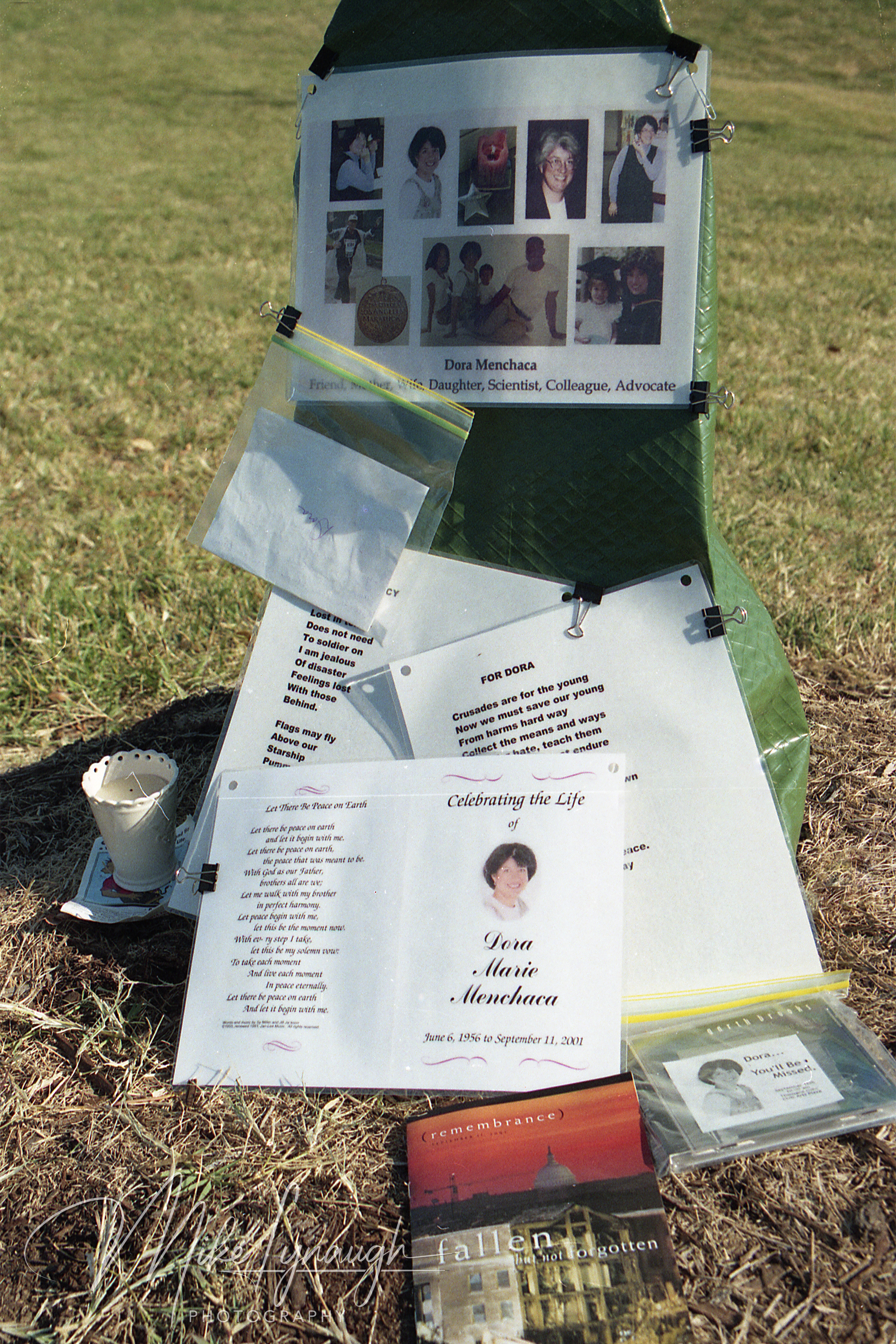 Photographed on September 28, 2001, this poignant close-up documents a personal memorial dedicated to Dr. Dora Marie Menchaca, a 45-year-old epidemiologist and Director of Clinical Research at Amgen who was a passenger aboard American Airlines Flight 77. Dr. Menchaca, who held a doctorate from UCLA, had been in Washington, D.C. briefing the FDA on a new drug application for prostate cancer treatment. After finishing her meetings early, she booked an earlier flight home to Santa Monica, California, to return to her husband and young son. Attached to a protected tree trunk near the Pentagon, this spontaneous shrine includes photo collages, poetry, and her funeral program ("Celebrating the Life of Dora Marie Menchaca") left by family, friends, and colleagues. © Mike Lynaugh Photography
 Photographed on October 29, 2001, a VH-46D Sea Knight helicopter from Marine Helicopter Squadron One (HMX-1) flies over the Pentagon, passing directly above the collapse zone where recovery and demolition efforts continue. Below, telephoto details reveal an American flag pinned inside the exposed interior framing of the destroyed E Ring alongside heavy machinery clearing steel rebar and rubble in the weeks following the September 11 attack. © Mike Lynaugh Photography
 Photographed on October 29, 2001, this telephoto shot shows the heavily sheared outer ring of the Pentagon framed by golden autumn leaves. Captured nearly seven weeks after the September 11 attack, the image reveals exposed internal office walls, hanging rebar, and temporary floodlight stands along the perimeter fence line as stabilization and site clearance efforts continued. © Mike Lynaugh Photography
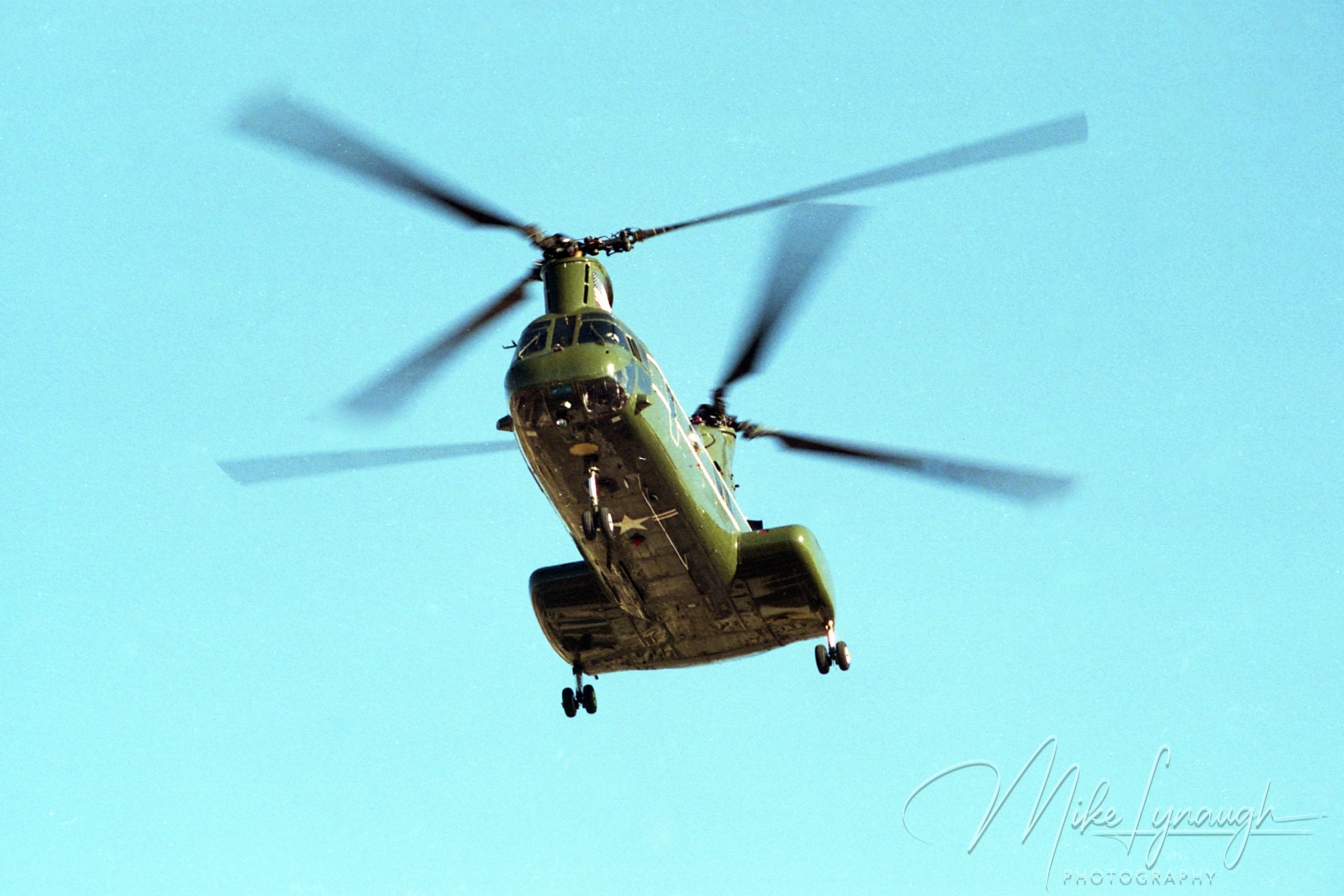 Photographed on October 29, 2001, this dramatic, low-angle telephoto shot captures a VH-46D Sea Knight helicopter from Executive Transport Squadron One (HMX-1) banking overhead directly above the photographer. Flying in the restricted airspace near the Pentagon recovery site nearly seven weeks after September 11, the aircraft displays its dual tandem rotors in motion as VIP and official transport flights operated continuously throughout the National Capital Region. © Mike Lynaugh Photography
 Photographed on October 29, 2001, this telephoto detail frames heavy recovery equipment—including a yellow crane arm and a red Hitachi excavator—operating directly beneath the Pentagon's damaged collapse zone. The view offers a close look at the exposed, multi-level office interior, charred wall partitions, dangling wire mesh, and a small American flag mounted among the structural debris. © Mike Lynaugh Photography
 Photographed on October 29, 2001, this vertical composition captures an United Airlines commercial passenger jet climbing into clear blue skies directly over the damaged west facade of the Pentagon. Taken weeks after the September 11 attack as commercial aviation resumed normal operations out of nearby Reagan National Airport, the image contrasts active flight corridors with the exposed structural debris, ongoing recovery scaffolding, and the American flag displayed at ground level. © Mike Lynaugh Photography
 Captured at dusk in late October 2001, this long-exposure photograph documents the ongoing recovery and stabilization work at the Pentagon's west facade following the September 11 attack. Interior office lights and floodlights illuminate the exposed inner rings, while long light streaks from passing traffic along nearby roadways cut across the foreground, framing the central American flag and the surrounding security perimeter. © Mike Lynaugh Photography
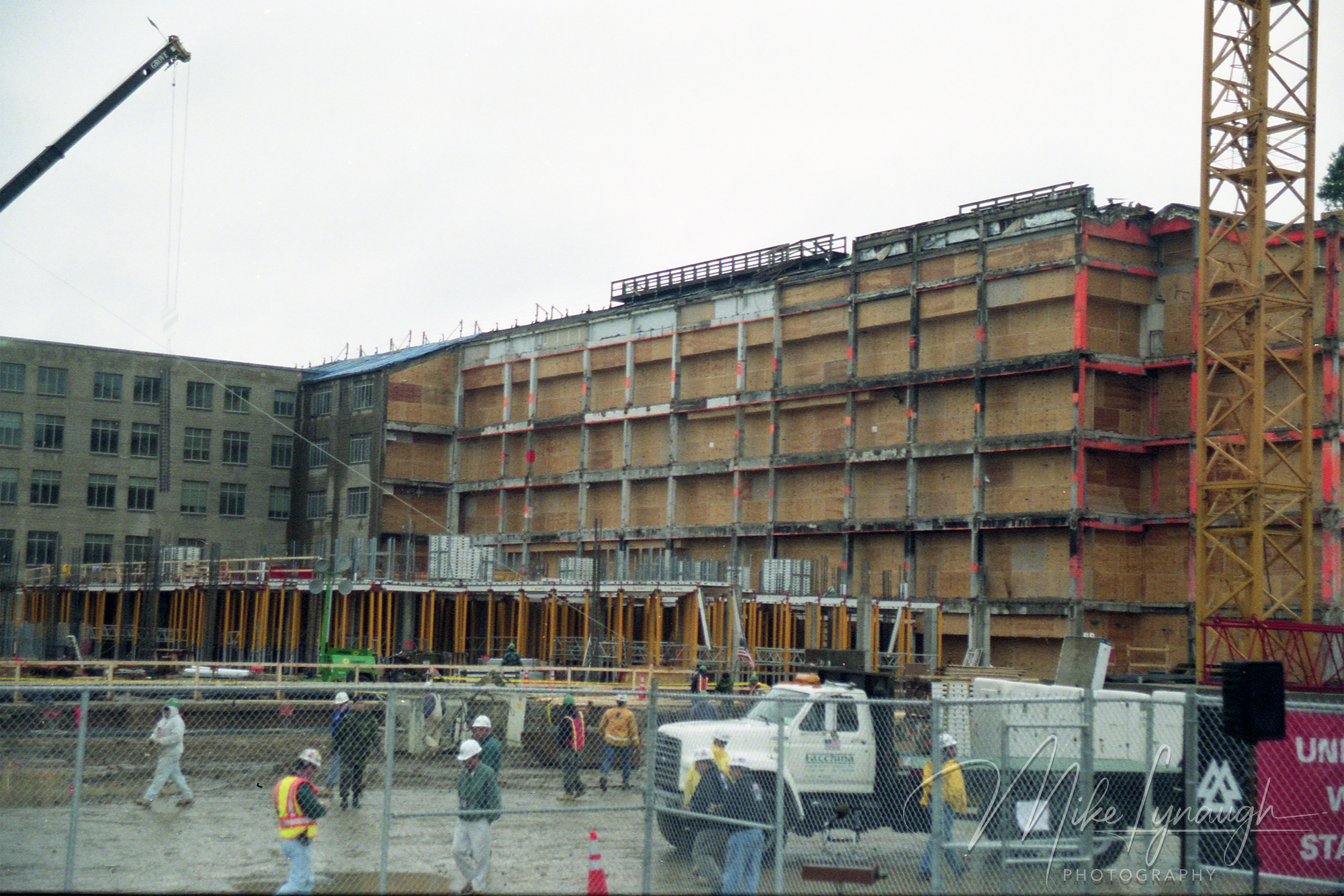 Captured on December 11, 2001, this wide photograph documents the active rebuilding phase of Project Phoenix at the Pentagon, taken on the three-month anniversary of the September 11 attack. Massive yellow construction cranes and temporary shoring posts support the foundation levels, while extensive plywood walling seals the exposed inner rings of the structure as construction crews work within the secured perimeter. © Mike Lynaugh Photography
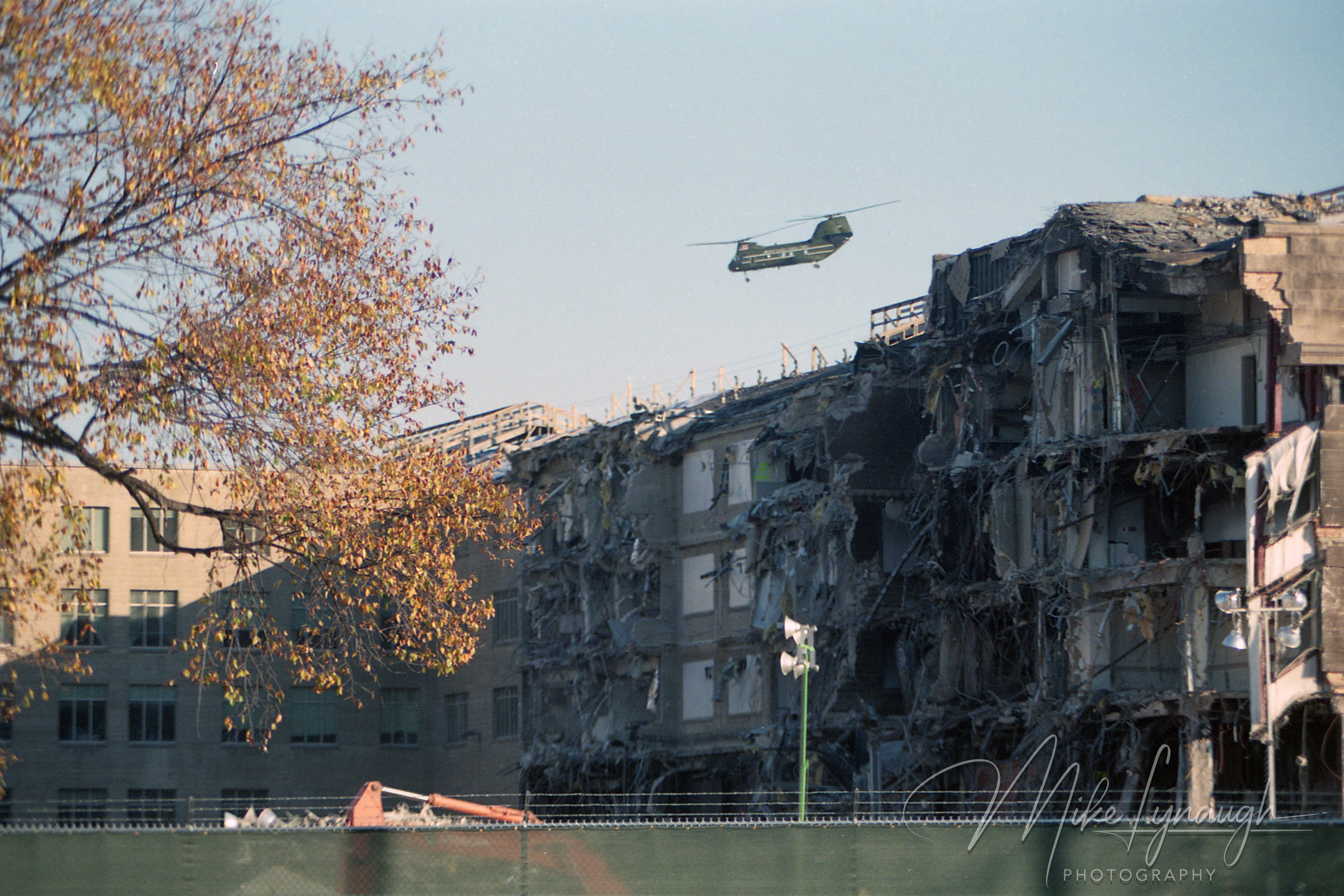 Captured on October 29, 2001, a VH-46D Sea Knight tandem-rotor helicopter operated by HMX-1 flies past the damaged west facade of the Pentagon as autumn foliage turns color in the foreground. Taken nearly seven weeks after the September 11 attack, the image captures the progression of time during the reconstruction efforts, juxtaposing the changing fall leaves with the exposed, heavily reinforced concrete walls and ongoing site clearing below. © Mike Lynaugh Photography
 Photographed on December 11, 2001, three months after the September 11 attack, this memorial card commemorates Barbara K. Olson, a prominent conservative legal analyst and passenger aboard American Airlines Flight 77. Placed against an American flag backdrop near the Pentagon, the printed tribute details her final phone call to her husband, U.S. Solicitor General Theodore Olson, and honors her career as an author, television commentator, and federal prosecutor. © Mike Lynaugh Photography
 Photographed on December 11, 2001, during the three-month 9/11 memorial ceremony at the Pentagon, this display wall features individual biography cards honoring victims of the attack. Set against American flag backdrops, the tributes feature photos and biographical profiles of military personnel, defense civilians, and passengers aboard American Airlines Flight 77, serving as a solemn focal point during official proceedings at the reconstruction site. © Mike Lynaugh Photography
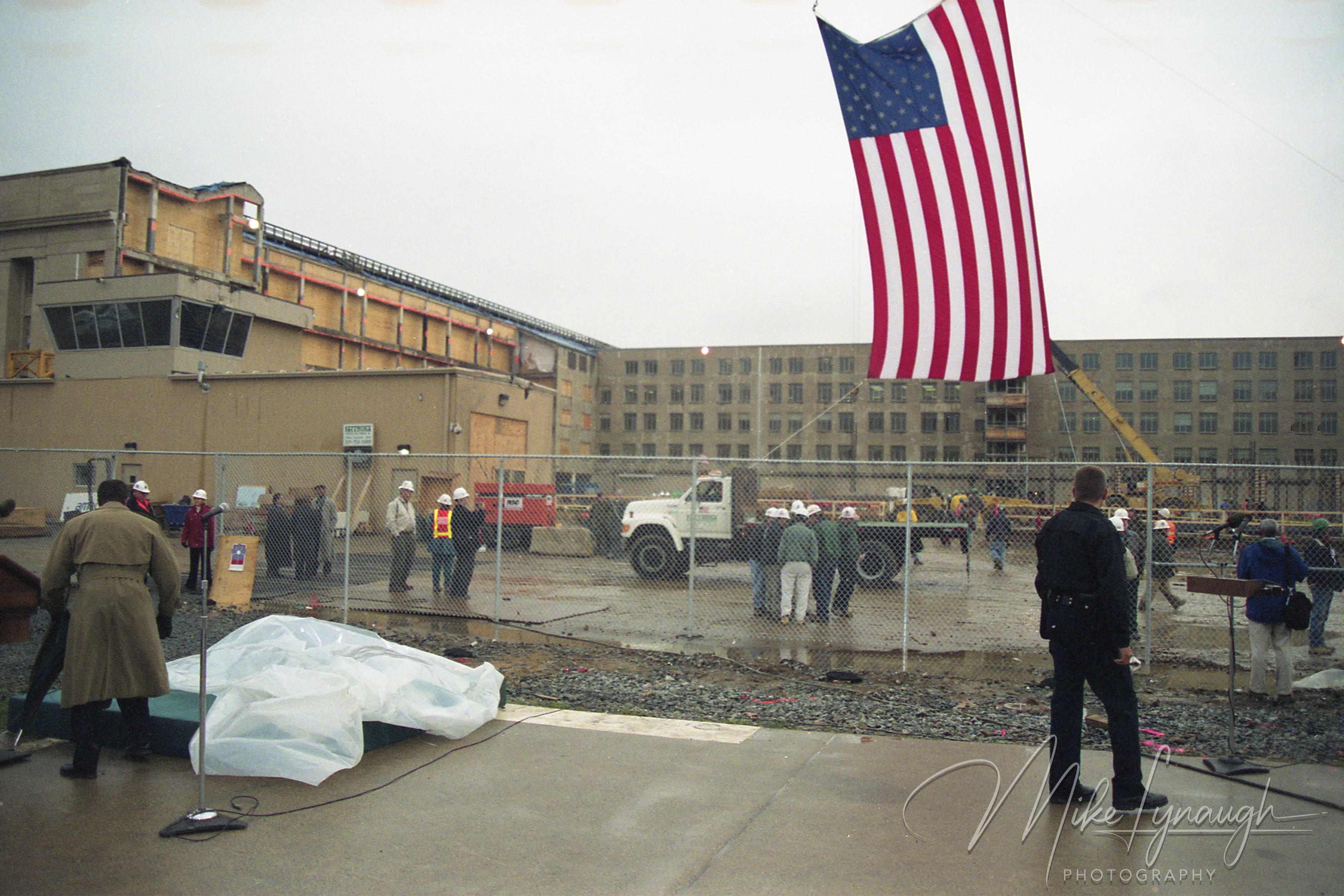 hotographed on December 11, 2001, immediately following an official ceremony featuring Secretary of Defense Donald Rumsfeld, this image marks three months since the September 11 attack. A large American flag hangs suspended from a crane high above the Phoenix Project reconstruction site, where press podiums, microphones, construction crews, and officials remain gathered in front of the shored-up, damaged facade as active rebuilding efforts officially took precedence over recovery work. © Mike Lynaugh Photography
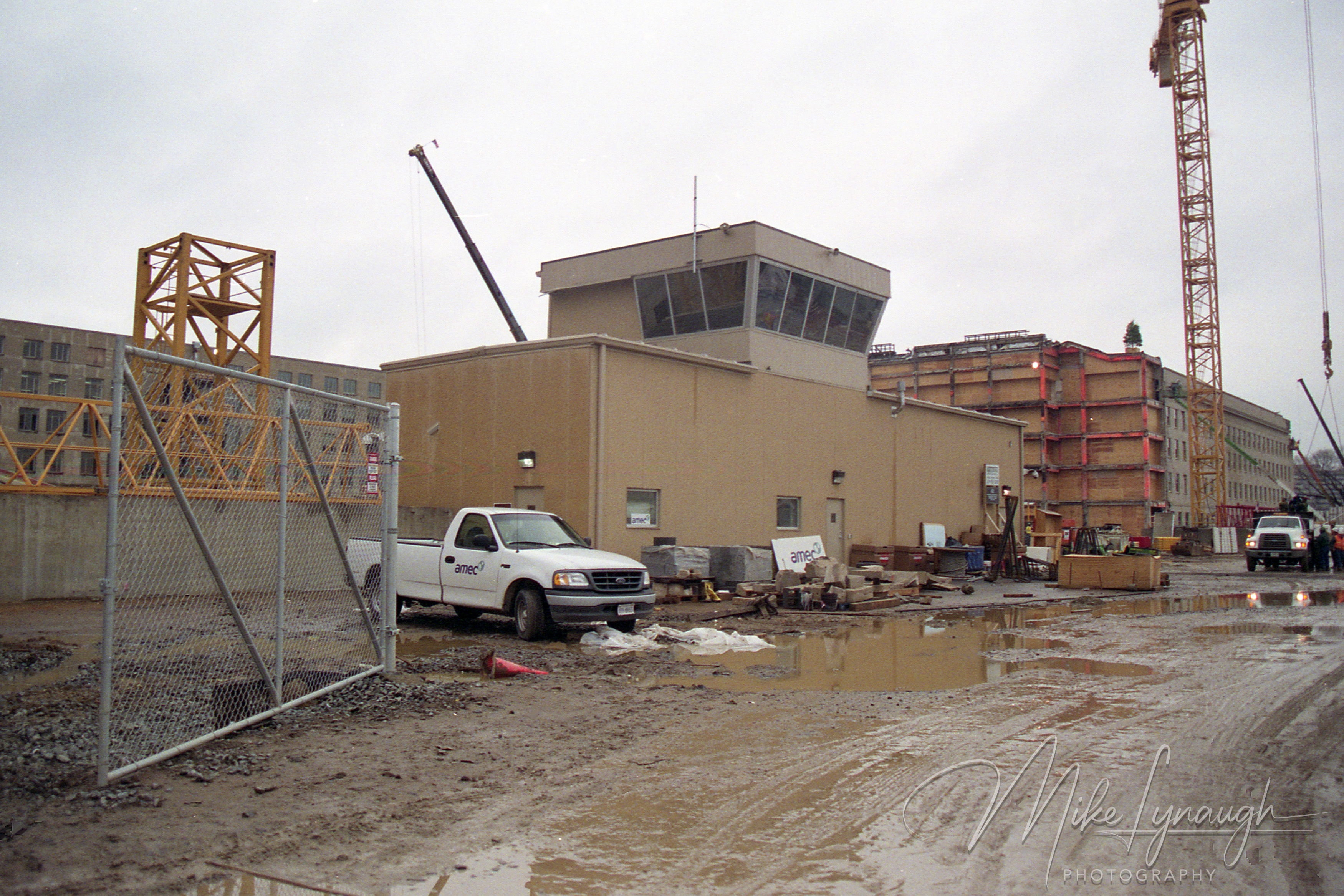 Captured on December 11, 2001, during the three-month 9/11 anniversary at the Pentagon, this wide photograph shows the exterior of the Pentagon Heliport control tower alongside active construction operations. An AMEC contractor pickup truck sits in the foreground amidst mud and puddles, flanked by heavy tower cranes and the shored-up, plywood-enclosed facade of the Project Phoenix rebuilding site. © Mike Lynaugh Photography